Dan Dan Noodles
This post may contain affiliate links. Read our affiliate disclosure.
🧪 Developed & tested by the The Chowmi Test Kitchen for US kitchens. How we develop our recipes.
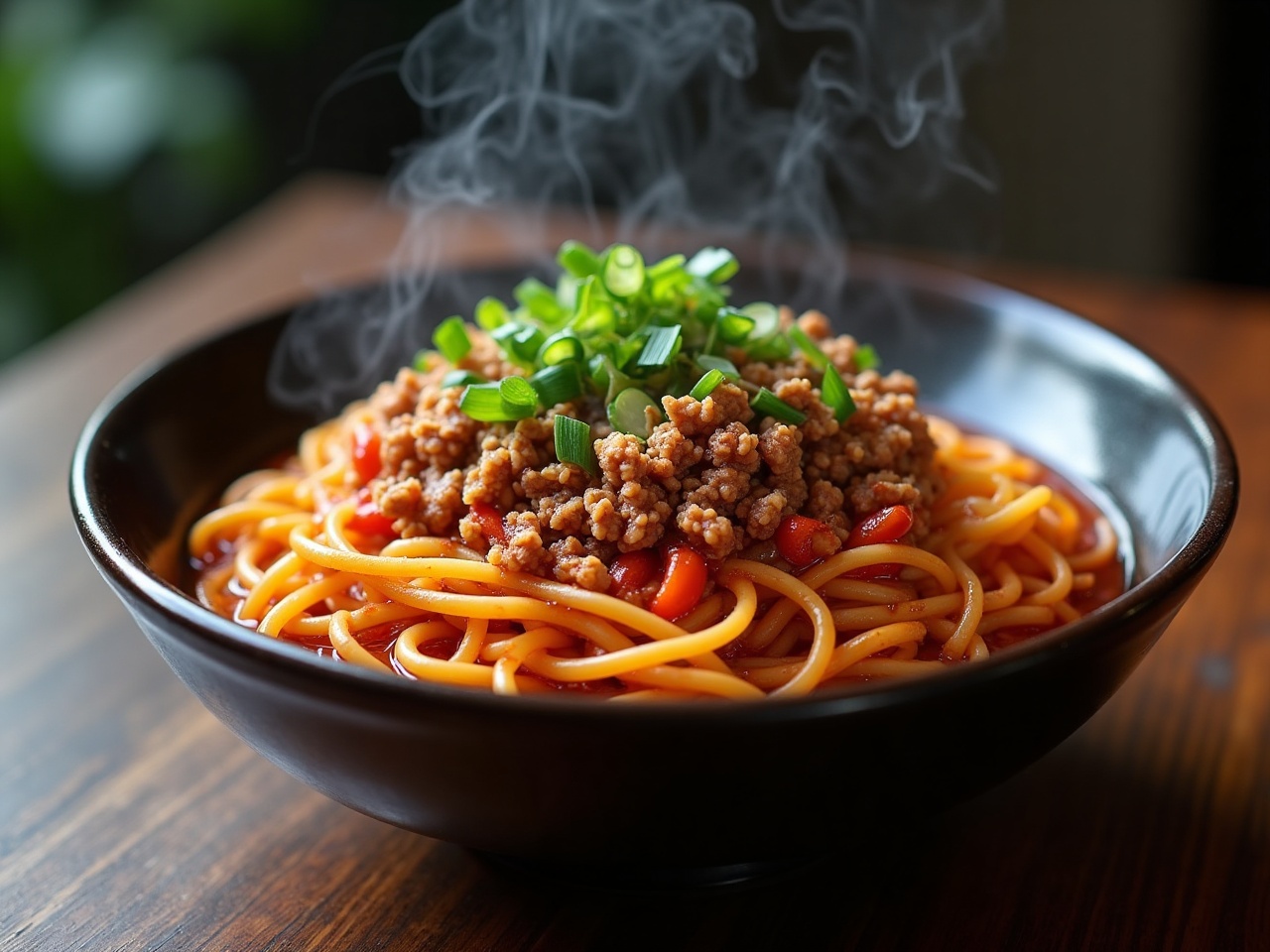
Dan dan noodles (担担面, dàndàn miàn) are a Sichuan street-food classic: chewy wheat noodles tossed in a bold sauce that's spicy, numbing, savory, nutty, and tangy all at once, topped with crispy stir-fried pork and crunchy preserved mustard greens (ya cai). The classic Chengdu version is “dry” — the sauce coats the noodles rather than sitting in broth. The flavor is built in the bowl: chili oil, light soy, Chinkiang black vinegar, a little sesame paste, sugar, garlic, and freshly ground toasted Sichuan peppercorn, then you cook the noodles, pile on the pork, and toss everything together before eating. It comes together in about 30 minutes. The magic is balance — getting the chili heat, the numbing tingle, the nutty sesame, and the black-vinegar tang to all show up at once.
 Save to Pinterest
Why you'll love this dan dan noodles
- Bold, spicy-numbing-nutty-tangy Sichuan street food, better than any takeout.
- The sauce is built right in the serving bowl — no fussy technique.
- Every hard-to-find ingredient comes with a precise US-grocery substitute.
- Ready in 30 minutes and easily made vegetarian with mushrooms.
Ingredients
Pork topping
Sauce (per bowl)
To serve
Missing an ingredient?
AITell us what you have and what you're making — get the best US-grocery swap, with ratios.
Hard-to-find ingredients, delivered
Stock the pantry once and you can cook this anytime: ya cai, Shaoxing wine, Chinkiang black vinegar, ground toasted Sichuan peppercorn. Asian groceries deliver nationwide.
Equipment
Instructions
Make the pork: heat a little oil in a wok over medium-high, add the ground pork, and stir-fry, breaking it up, until browned and crisp at the edges, 4–5 minutes. Add the ya cai, Shaoxing wine, and dark soy and fry 1 more minute until dry and fragrant. Set aside.
Build the sauce in each serving bowl: divide the chili oil, light soy, black vinegar, loosened sesame paste, ground Sichuan peppercorn, sugar, and grated garlic between two bowls and stir.
💡 Taste and balance the sauce now — it should hit spicy, sour, savory, and a little sweet. Add a splash of the noodle water later to loosen it.
Cook the noodles in boiling water until just tender, then drain (save a few tablespoons of the noodle water).
Add the hot noodles to each bowl of sauce along with a spoonful of the noodle water. Toss well so every strand is coated.
Top with the crispy pork, scallions, and crushed peanuts. Toss everything together at the table before eating — the sauce is meant to coat the noodles, not pool underneath.
💡 Eat it right away while hot; the sauce clings best when everything's freshly tossed.
Tips & notes
- Ya cai (preserved mustard greens) gives dan dan noodles their signature savory-crunchy topping. No ya cai? Any Asian preserved/pickled mustard green, or even a little finely chopped kimchi squeezed dry, gets you close.
- “Chili oil to taste” is real here — start with 2 tablespoons including some of the chili sediment, then add more. The dish should look red and glossy.
- Chinese sesame paste is nuttier and more bitter than tahini, but tahini loosened with water is a fine swap. Don't skip it — it's what rounds the sauce.
- Make it vegetarian by swapping the pork for finely chopped shiitake mushrooms browned until crisp.
Recipe wording too vague?
AIPaste any fuzzy step (少许, 火候正好, 焯水) and get exact amounts, temps and times.
Dan Dan Noodles
- Prep
- 10 min
- Cook
- 20 min
- Total
- 30 min
- Serves
- 2
- Level
- Intermediate
Ingredients
- 6 oz ground pork, or finely chopped shiitake for vegetarian
- 2 tbsp ya cai (Sichuan preserved mustard greens), or any preserved/pickled mustard
- 1 tbsp Shaoxing wine
- 1 tsp dark soy sauce
- 2 tbsp chili oil, with some of the sediment, to taste
- 1 tbsp light soy sauce
- 2 tsp Chinkiang black vinegar
- 1 tbsp Chinese sesame paste, or tahini, loosened with a little water
- ½ tsp ground toasted Sichuan peppercorn
- 1 tsp sugar
- 1 clove garlic, grated
- 8 oz wheat noodles, fresh or dried, thin
- 2 scallions, sliced
- 2 tbsp roasted peanuts, crushed
Instructions
- Make the pork: heat a little oil in a wok over medium-high, add the ground pork, and stir-fry, breaking it up, until browned and crisp at the edges, 4–5 minutes. Add the ya cai, Shaoxing wine, and dark soy and fry 1 more minute until dry and fragrant. Set aside.
- Build the sauce in each serving bowl: divide the chili oil, light soy, black vinegar, loosened sesame paste, ground Sichuan peppercorn, sugar, and grated garlic between two bowls and stir.
- Cook the noodles in boiling water until just tender, then drain (save a few tablespoons of the noodle water).
- Add the hot noodles to each bowl of sauce along with a spoonful of the noodle water. Toss well so every strand is coated.
- Top with the crispy pork, scallions, and crushed peanuts. Toss everything together at the table before eating — the sauce is meant to coat the noodles, not pool underneath.
Nutrition (est., per serving): 620 cal · 26 g protein · 62 g carbs · 30 g fat
Dan Dan Noodles FAQ
Are dan dan noodles soupy or dry?
The classic Chengdu version is “dry” — the sauce coats the noodles rather than sitting in broth, and you toss everything together before eating. Some restaurants, especially outside Sichuan, serve a soupier version with added stock. This recipe is the traditional dry style.
What is ya cai and what can I substitute?
Ya cai (芽菜) is a Sichuan preserved mustard green — savory, slightly sweet, and crunchy — that gives dan dan noodles their signature topping with the pork. If you can't find it, use any Asian preserved or pickled mustard green, Tianjin preserved vegetable, or, in a pinch, a little finely chopped kimchi squeezed dry.
What noodles are best for dan dan noodles?
Thin, fresh wheat noodles are ideal, but thin dried wheat noodles (or even thin lo mein or ramen-style noodles) work well. Avoid rice noodles — the sauce is made to cling to chewy wheat noodles.
Can I make dan dan noodles less spicy or numbing?
Yes. Cut the chili oil down and use less (or skip) the ground Sichuan peppercorn to reduce the numbing. You'll still get the nutty-tangy-savory sauce that makes the dish special; the heat and tingle are adjustable to taste.
How do I make vegetarian dan dan noodles?
Swap the ground pork for finely chopped shiitake or king oyster mushrooms, browned until crisp, and check that your noodles and sauces are meat-free. The ya cai, sesame, chili oil, and Sichuan peppercorn carry the flavor, so you lose very little.
You might also like
Get our free Chinese Kitchen Starter Guide
The 12 pantry staples, the 5 techniques, and a week of beginner-friendly dinners — plus a new decoded recipe each week.
Comments
Made this? Have a question or a tweak? Share it below.
No comments yet — be the first!