Mapo Tofu
This post may contain affiliate links. Read our affiliate disclosure.
🧪 Developed & tested by the The Chowmi Test Kitchen for US kitchens. How we develop our recipes.
Mapo tofu (麻婆豆腐) is a Sichuan dish of silken tofu simmered in a spicy, numbing, savory sauce built on doubanjiang (fermented broad-bean chili paste) and ground Sichuan peppercorn. To make it well, you brown a little ground pork (or mushrooms), bloom doubanjiang and chili flakes in oil until the oil turns red, add stock plus the gently-poached tofu, and thicken with a cornstarch slurry in two additions so the sauce clings without turning gluey. The signature is málà — má (numbing, from Sichuan peppercorn) plus là (heat, from the chili paste). Total time is about 30 minutes, and the two ingredients that define it, doubanjiang and Sichuan peppercorn, are the two worth buying real rather than substituting.
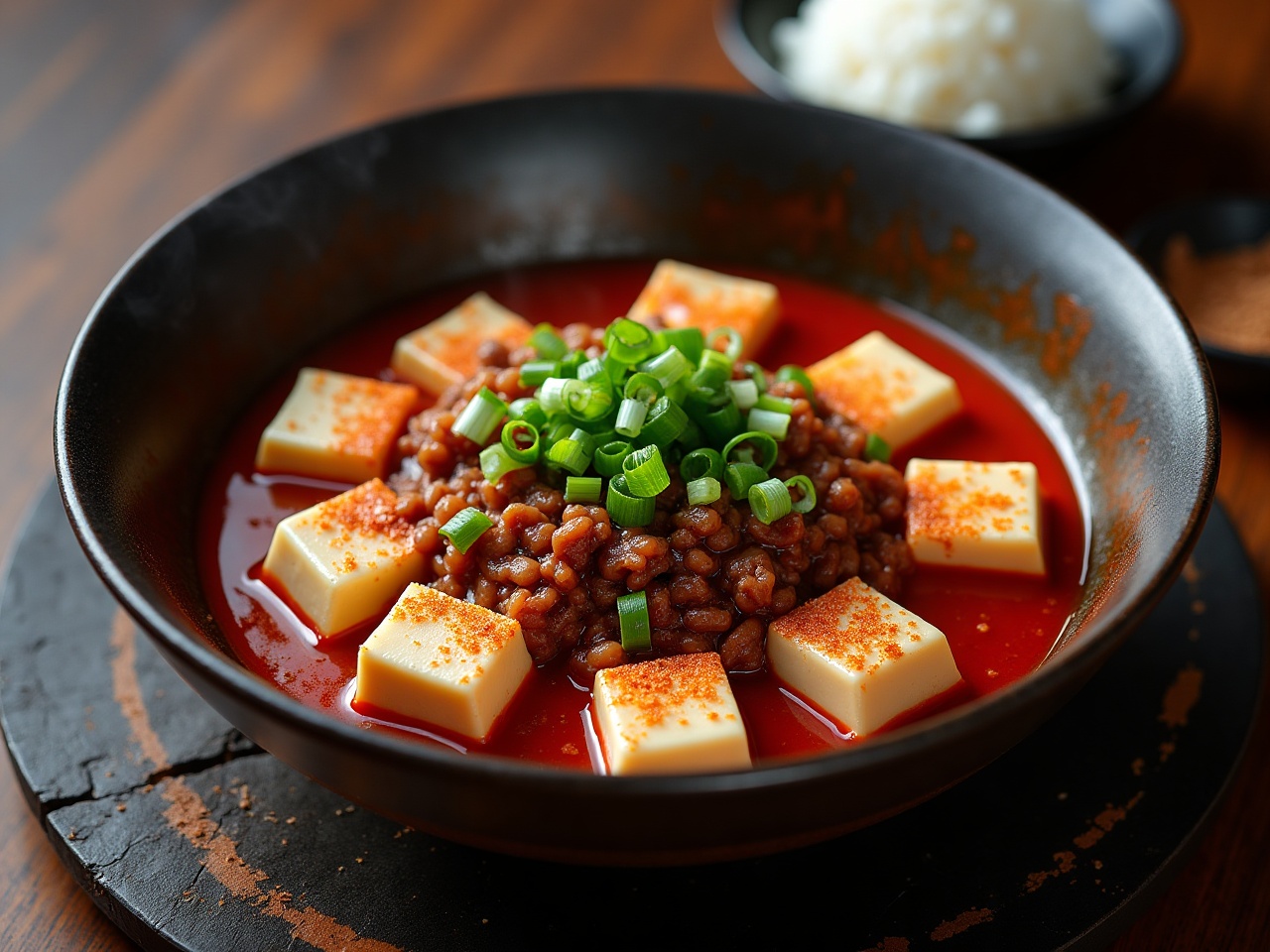 Save to Pinterest
Why you'll love this mapo tofu
- Restaurant-level málà flavor from one trip to the Asian-grocery shelf — no special equipment.
- Ready in 30 minutes, mostly hands-off once the sauce is built.
- We flag every hard-to-find ingredient and give an exact US-grocery swap, so you can start tonight.
- Easily made vegetarian — swap the pork for mushrooms and the sauce carries the dish.
Ingredients
Main
Sauce
Slurry
Missing an ingredient?
AITell us what you have and what you're making — get the best US-grocery swap, with ratios.
Hard-to-find ingredients, delivered
Stock the pantry once and you can cook this anytime: doubanjiang, fermented black beans, Sichuan peppercorns. Asian groceries deliver nationwide.
Equipment
- Wok or wide skillet — A wide pan lets the sauce reduce fast without crowding the tofu.(shop →)
- Fine-mesh spider or slotted spoon — For lifting the delicate tofu without breaking it.(shop →)
Instructions
Bring a small pot of water to a gentle simmer, add a pinch of salt, and slip in the tofu cubes. Let them warm through for 2 minutes, then turn off the heat and leave them in the water. This firms the tofu so it holds its shape in the sauce.
💡 Warming the tofu in salted water is the single biggest fix for tofu that falls apart. Don't skip it.
Toast the Sichuan peppercorns in a dry pan over medium heat for about 60 seconds until fragrant, then grind. Set aside.
Heat 2 tbsp oil in the wok over medium heat. Add the ground pork and cook, breaking it up, until it's no longer pink and starting to crisp, about 3 minutes. (For vegetarian, brown the chopped mushrooms the same way until their water cooks off.)
Push the pork to one side, add the doubanjiang and chili flakes to the oil, and stir for 30–60 seconds until the oil turns deep red. This blooming step is what gives mapo tofu its color and depth — do it before adding any liquid.
💡 Keep the heat at medium here. Doubanjiang scorches fast, and burnt bean paste tastes bitter.
Add the garlic, ginger, scallion whites, and fermented black beans (if using). Stir for 30 seconds until fragrant.
Pour in the stock and soy sauce and bring to a simmer. Gently drain the tofu and slide it in. Simmer for 3–4 minutes, nudging rather than stirring so the cubes stay whole.
Stir the cornstarch and cold water into a fresh slurry. With the sauce at a simmer, add about half, stir gently, wait 30 seconds, then add the rest until the sauce coats a spoon. Two additions give you control and a glossy, clinging sauce instead of a gluey one.
💡 Always re-mix the slurry right before pouring — cornstarch settles to the bottom within minutes.
Turn off the heat. Scatter the ground Sichuan peppercorn and scallion greens over the top. Serve immediately over hot rice.
Tips & notes
- “Numbing” isn't a typo. The tingle from Sichuan peppercorn (má) is the point — it's a different sensation from chili heat, and a real mapo tofu has both.
- Recipe says “a little doubanjiang” with no amount? Start at 2 tbsp for a 14 oz block of tofu and adjust up — it's salty, so taste before adding any extra soy.
- “Medium-high heat” in Chinese recipes usually means oil at 6–7/10: it shimmers with fine ripples but isn't smoking. Food should sizzle the instant it hits the pan.
- Make it less spicy for kids by cutting the chili flakes entirely and halving the doubanjiang — you'll keep the savory-fermented flavor without the burn.
Recipe wording too vague?
AIPaste any fuzzy step (少许, 火候正好, 焯水) and get exact amounts, temps and times.
Mapo Tofu
- Prep
- 10 min
- Cook
- 20 min
- Total
- 30 min
- Serves
- 4
- Level
- Beginner
Ingredients
- 1 block (14 oz) soft / silken tofu, drained, cut into ¾-inch cubes
- 4 oz ground pork, or finely chopped shiitake mushrooms for vegetarian
- 2 scallions, white and green parts separated, sliced
- 3 cloves garlic, minced
- 1 inch ginger, minced
- 2 tbsp doubanjiang (Pixian broad-bean chili paste), the soul of the dish
- 1 tbsp fermented black beans (douchi), optional, rinsed and lightly mashed
- 1 tsp Sichuan peppercorns, toasted and ground, for the numbing má
- 1 tsp chili flakes or chili oil, adjust to taste
- 1 cup chicken or vegetable stock
- 1 tsp light soy sauce
- 2 tbsp neutral oil
- 1.5 tbsp cornstarch
- 3 tbsp cold water
Instructions
- Bring a small pot of water to a gentle simmer, add a pinch of salt, and slip in the tofu cubes. Let them warm through for 2 minutes, then turn off the heat and leave them in the water. This firms the tofu so it holds its shape in the sauce.
- Toast the Sichuan peppercorns in a dry pan over medium heat for about 60 seconds until fragrant, then grind. Set aside.
- Heat 2 tbsp oil in the wok over medium heat. Add the ground pork and cook, breaking it up, until it's no longer pink and starting to crisp, about 3 minutes. (For vegetarian, brown the chopped mushrooms the same way until their water cooks off.)
- Push the pork to one side, add the doubanjiang and chili flakes to the oil, and stir for 30–60 seconds until the oil turns deep red. This blooming step is what gives mapo tofu its color and depth — do it before adding any liquid.
- Add the garlic, ginger, scallion whites, and fermented black beans (if using). Stir for 30 seconds until fragrant.
- Pour in the stock and soy sauce and bring to a simmer. Gently drain the tofu and slide it in. Simmer for 3–4 minutes, nudging rather than stirring so the cubes stay whole.
- Stir the cornstarch and cold water into a fresh slurry. With the sauce at a simmer, add about half, stir gently, wait 30 seconds, then add the rest until the sauce coats a spoon. Two additions give you control and a glossy, clinging sauce instead of a gluey one.
- Turn off the heat. Scatter the ground Sichuan peppercorn and scallion greens over the top. Serve immediately over hot rice.
Nutrition (est., per serving): 290 cal · 16 g protein · 12 g carbs · 20 g fat
Mapo Tofu FAQ
What kind of tofu is best for mapo tofu?
Soft or silken tofu is traditional — it gives the dish its custardy, melt-in-your-mouth texture. If you're nervous about it breaking, medium-firm works and is more forgiving. Avoid extra-firm: it stays rubbery and never absorbs the sauce. Warming the cubes in salted water before they hit the sauce keeps even silken tofu intact.
What can I use instead of doubanjiang?
Doubanjiang (Pixian broad-bean chili paste) is the one ingredient worth buying real — it's about $4–6 a jar and lasts six months. If you truly can't get it, the closest swap is Korean gochujang plus a little white miso (about 2:1) with a pinch of sugar; it'll read sweeter and more Korean but works for one batch. Never substitute sriracha — the flavor profile is completely wrong.
Is mapo tofu very spicy?
Traditionally yes, but it's adjustable. The heat comes from the chili flakes and the chili in the doubanjiang, while the numbing tingle comes separately from Sichuan peppercorn. For a mild version, cut the chili flakes and halve the doubanjiang — you keep the deep savory-fermented flavor without much burn.
How do I make mapo tofu vegetarian or vegan?
Swap the ground pork for finely chopped shiitake or king oyster mushrooms, browned until their moisture cooks off so they crisp slightly. Use vegetable stock, and check that your doubanjiang has no added animal products (most are vegan). The sauce carries the dish, so you lose very little.
Why did my tofu fall apart?
Three usual culprits: the tofu was too soft and went straight into a hard boil; the sauce was stirred instead of gently nudged; or the tofu was cold and shocked by the hot sauce. Warming the cubes in salted water first, keeping the sauce at a gentle simmer, and folding rather than stirring fixes it.
You might also like
Get our free Chinese Kitchen Starter Guide
The 12 pantry staples, the 5 techniques, and a week of beginner-friendly dinners — plus a new decoded recipe each week.
Comments
Made this? Have a question or a tweak? Share it below.
No comments yet — be the first!