Soy Sauce Chow Mein
This post may contain affiliate links. Read our affiliate disclosure.
🧪 Developed & tested by the The Chowmi Test Kitchen for US kitchens. How we develop our recipes.
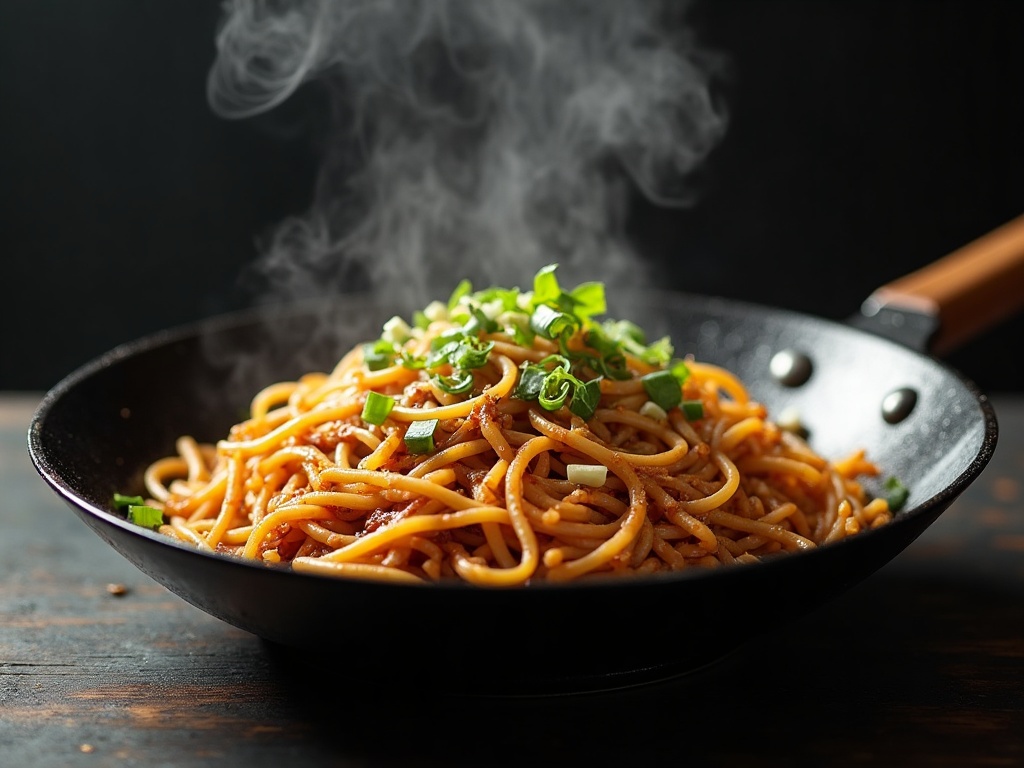
Soy sauce chow mein (豉油皇炒麵) is the simplest and most iconic Cantonese pan-fried noodle dish: springy egg noodles seared hard in a hot wok and tossed with bean sprouts and scallion in a quick sauce of light soy, dark soy, a little sugar and sesame oil. There's no heavy gravy — the flavor is soy and wok hei, the smoky char you get from frying noodles over high heat. Two things make or break it: dry the parboiled noodles thoroughly so they fry instead of steam, and resist over-stirring — press the noodles into the hot wok and let them catch a little color before tossing. Light soy does the seasoning; dark soy is there for color, not salt. It comes together in about 15 minutes and is a perfect base for char siu, shrimp, or just more vegetables.
 Save to Pinterest
Why you'll love this soy sauce chow mein
- Takeout-style pan-fried noodles in 15 minutes, with that smoky wok flavor takeout often misses.
- A five-ingredient sauce you'll memorize after one try.
- Naturally vegetarian — and an ideal base for leftover char siu, shrimp, or chicken.
- We tell you the one step (drying the noodles) that separates springy chow mein from a soggy clump.
Ingredients
Noodles
Sauce
Stir-fry
Missing an ingredient?
AITell us what you have and what you're making — get the best US-grocery swap, with ratios.
Hard-to-find ingredients, delivered
Stock the pantry once and you can cook this anytime: fresh Hong Kong–style thin egg noodles. Asian groceries deliver nationwide.
Equipment
- Wok or large flat skillet — A wide, very hot surface is what gives the noodles their char.(shop →)
Instructions
Cook the noodles: boil fresh noodles for about 1 minute (or dried per the package until just al dente), then drain very well and spread them out to dry for a few minutes. Damp noodles steam and clump instead of frying.
💡 If you have time, let the drained noodles air-dry 10 minutes, or pat them with a towel. Dry noodles are the whole secret to wok-fried texture.
Stir the sauce ingredients together in a small bowl until the sugar dissolves.
Heat 1 tbsp oil in the wok over high heat until shimmering. Add the noodles and press them into a thin layer. Let them sit, undisturbed, for about a minute so the underside browns, then flip and brown the other side. Slide them back into the bowl.
💡 Resist the urge to keep tossing. Noodles need still contact with hot metal to catch color and develop wok hei.
Add the last 1 tbsp oil. Stir-fry the onion for 30 seconds, then add the bean sprouts and scallions and stir-fry just 30–60 seconds — they should stay crisp.
Return the noodles, pour the sauce around the edge of the wok, and toss everything quickly for about a minute until the noodles are evenly colored and glossy. Serve right away.
Tips & notes
- Dark soy is for color, light soy for salt. If you only have one bottle of regular soy sauce, use it for the seasoning and just expect a paler dish.
- Add protein by tossing in sliced char siu, cooked shrimp, or shredded chicken with the vegetables — this dish was made to carry leftovers.
- Too soggy? It's almost always wet noodles or a pan that wasn't hot enough. Dry the noodles well and don't crowd the wok; cook in two batches if needed.
- For more authentic wok hei on a home stove, get the wok properly smoking-hot before the noodles go in, and work fast.
Recipe wording too vague?
AIPaste any fuzzy step (少许, 火候正好, 焯水) and get exact amounts, temps and times.
Soy Sauce Chow Mein
- Prep
- 5 min
- Cook
- 10 min
- Total
- 15 min
- Serves
- 2
- Level
- Beginner
Ingredients
- 12 oz fresh Hong Kong–style thin egg noodles, or 8 oz dried chow mein / lo mein noodles
- 2 tbsp light soy sauce
- 1 tbsp dark soy sauce, for color, not salt
- 1 tbsp oyster sauce, optional; leave out to keep it vegan
- 1 tsp sugar
- 1 tsp toasted sesame oil
- 2 tbsp water
- 2 cups bean sprouts
- 4 scallions, cut into 2-inch lengths
- ½ onion, thinly sliced
- 2 tbsp neutral oil, divided
Instructions
- Cook the noodles: boil fresh noodles for about 1 minute (or dried per the package until just al dente), then drain very well and spread them out to dry for a few minutes. Damp noodles steam and clump instead of frying.
- Stir the sauce ingredients together in a small bowl until the sugar dissolves.
- Heat 1 tbsp oil in the wok over high heat until shimmering. Add the noodles and press them into a thin layer. Let them sit, undisturbed, for about a minute so the underside browns, then flip and brown the other side. Slide them back into the bowl.
- Add the last 1 tbsp oil. Stir-fry the onion for 30 seconds, then add the bean sprouts and scallions and stir-fry just 30–60 seconds — they should stay crisp.
- Return the noodles, pour the sauce around the edge of the wok, and toss everything quickly for about a minute until the noodles are evenly colored and glossy. Serve right away.
Nutrition (est., per serving): 480 cal · 13 g protein · 72 g carbs · 16 g fat
Soy Sauce Chow Mein FAQ
What noodles are best for chow mein?
Fresh thin Hong Kong–style egg noodles are traditional and give the springiest, most authentic result — look for them in the refrigerated section of an Asian market. Dried chow mein or lo mein noodles work too; cook them just to al dente. Avoid instant ramen-style noodles, which turn mushy.
What is the difference between chow mein and lo mein?
Both start with the same egg noodles. Chow mein (literally 'fried noodles') is pan-fried so the noodles pick up color and a little crispness; lo mein ('tossed noodles') is boiled and tossed with sauce, staying soft. This recipe is chow mein — the searing step is the point.
Why did my chow mein turn out soggy?
Two usual causes: the noodles were still wet when they hit the wok, or the wok wasn't hot enough. Drain and dry the noodles thoroughly, get the pan very hot, and don't overcrowd it — cook in two batches if your wok is small, so the noodles fry rather than steam.
How do I make chow mein vegan?
Leave out the oyster sauce (or use a vegetarian mushroom-based 'oyster' sauce). The light soy, dark soy, sugar and sesame oil already do most of the work, and the bean sprouts and scallions keep it satisfying. The egg noodles are the only other thing to check — some contain egg, so use an eggless wheat noodle if needed.
Can I add meat or shrimp?
Absolutely — this is a classic way to use leftovers. Stir in sliced char siu, cooked shrimp, or shredded chicken along with the vegetables so they just warm through. Cook any raw protein separately first, then add it back at the end so the noodles still get their time against the hot wok.
You might also like
Get our free Chinese Kitchen Starter Guide
The 12 pantry staples, the 5 techniques, and a week of beginner-friendly dinners — plus a new decoded recipe each week.
Comments
Made this? Have a question or a tweak? Share it below.
No comments yet — be the first!