Buddha's Delight (Lo Han Jai)
This post may contain affiliate links. Read our affiliate disclosure.
🧪 Developed & tested by the The Chowmi Test Kitchen for US kitchens. How we develop our recipes.
Buddha's Delight (罗汉斋, luóhàn zhāi, also called lo han jai) is the most famous Chinese vegetarian dish — a savory braise of tofu, mushrooms, and vegetables traditionally eaten by Buddhist monks and served across China on the first day of Lunar New Year. There's no fixed recipe, but the hallmark ingredients are firm or fried tofu, wood ear and shiitake mushrooms, napa cabbage, snow peas, carrots, bamboo shoots, and slippery glass (mung bean) noodles, all simmered in a light soy-and-mushroom sauce thickened to a glossy finish. Fermented red bean curd (nam yu) is the classic seasoning that gives it depth, though soy and a vegetarian 'oyster' sauce work too. It's naturally vegan and packed with contrasting textures — crisp, tender, springy, and silky. The keys are prepping each vegetable so everything stays crisp-tender, using the mushroom soaking liquid for a deeper broth, and adding the quick-cooking vegetables last. It's a wholesome, celebratory one-pot dish.
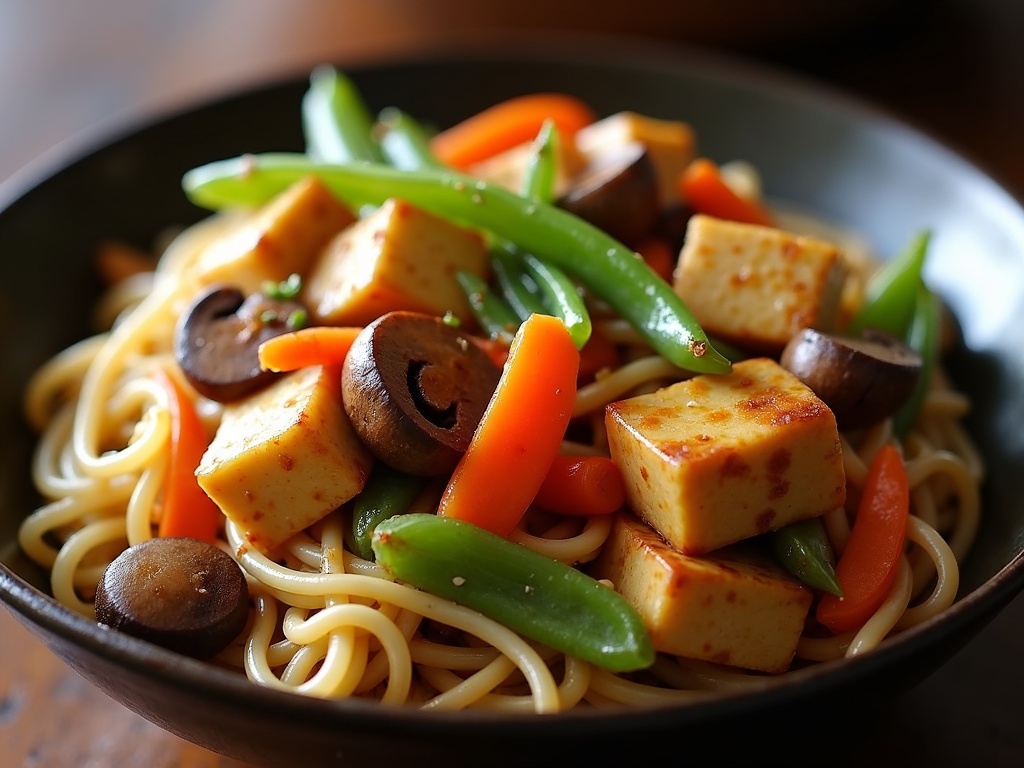 Save to Pinterest
Why you'll love this buddha's delight (lo han jai)
- The classic Chinese vegetarian feast dish — hearty, wholesome, and naturally vegan.
- A whole spectrum of textures: crisp snow peas, springy wood ear, silky glass noodles, tender tofu.
- Endlessly flexible — use whatever mushrooms and vegetables you have.
- A meaningful Lunar New Year tradition you can make any night of the week.
Ingredients
Soak & prep
Vegetables & tofu
Sauce
Missing an ingredient?
AITell us what you have and what you're making — get the best US-grocery swap, with ratios.
Hard-to-find ingredients, delivered
Stock the pantry once and you can cook this anytime: dried shiitake mushrooms, dried wood ear mushrooms, fermented red bean curd. Asian groceries deliver nationwide.
Equipment
- Wok or large sauté pan — Roomy enough to braise everything together.(shop →)
Instructions
Soak & prep
Soak the shiitake, wood ear, and glass noodles in warm water until soft (20 minutes); save the mushroom liquid. Slice the rehydrated mushrooms; cube and pan-fry the tofu until golden if not using fried tofu.
💡 Save the strained shiitake soaking liquid — it's a free vegetarian broth that gives the braise its savory backbone.
Start the aromatics & firm vegetables
Heat the oil in a wok, add the garlic and ginger, and stir 30 seconds. Add the carrot, shiitake, wood ear, and bamboo shoots; stir-fry 2 minutes.
Braise
Stir in the mashed red bean curd (if using), mushroom 'oyster' sauce, soy, sugar, and the mushroom liquid. Add the tofu and napa cabbage, cover, and simmer 5 minutes until the cabbage wilts.
Add noodles & snow peas
Add the drained glass noodles and snow peas and cook 2 minutes more, until the noodles are silky and the snow peas are bright and crisp-tender.
💡 Glass noodles soak up sauce fast — add them near the end so they stay slippery, not gummy.
Thicken & serve
Stir the cornstarch slurry and add it, tossing until the sauce turns glossy and lightly coats everything. Finish with sesame oil and serve.
Tips & notes
- There's no single 'correct' Buddha's Delight — swap in lotus root, lily buds, gluten puffs, baby corn, or fresh mushrooms based on what you have.
- Fermented red bean curd (nam yu) is the traditional flavor; if you skip it, lean on the mushroom sauce and shiitake liquid for depth.
- For fully vegan, use a mushroom-based 'oyster' sauce (most fermented bean curd is already vegan — check the label).
- Fry the tofu (or use ready fried tofu puffs) so it holds its shape and soaks up the braise without falling apart.
- Add vegetables in order of cook time — firm roots first, leafy and snap vegetables last — so nothing turns to mush.
Recipe wording too vague?
AIPaste any fuzzy step (少许, 火候正好, 焯水) and get exact amounts, temps and times.
Buddha's Delight (Lo Han Jai)
- Prep
- 25 min
- Cook
- 20 min
- Total
- 45 min
- Serves
- 4
- Level
- Intermediate
Ingredients
- 4 dried shiitake mushrooms, soaked (save the liquid)
- 3 tbsp dried wood ear mushrooms, soaked and sliced
- 2 oz glass (mung bean) noodles, soaked until pliable
- 14 oz firm tofu, cubed and pan-fried, or use fried tofu puffs
- 3 cups napa cabbage, chopped
- 1 cup snow peas, trimmed
- 1 carrot, sliced on the bias
- ½ cup bamboo shoots, sliced
- 3 cloves garlic, sliced
- 3 slices ginger
- 2 tbsp neutral oil
- 1 cube fermented red bean curd (nam yu), mashed — the traditional depth (optional)
- 2 tbsp vegetarian 'oyster' (mushroom) sauce, or light soy
- 1 tbsp light soy sauce
- 1 tsp sugar
- 1 tsp toasted sesame oil
- 1 cup mushroom soaking liquid, or vegetable stock
- 1 tbsp cornstarch, mixed with 2 tbsp water
Instructions
- Soak the shiitake, wood ear, and glass noodles in warm water until soft (20 minutes); save the mushroom liquid. Slice the rehydrated mushrooms; cube and pan-fry the tofu until golden if not using fried tofu.
- Heat the oil in a wok, add the garlic and ginger, and stir 30 seconds. Add the carrot, shiitake, wood ear, and bamboo shoots; stir-fry 2 minutes.
- Stir in the mashed red bean curd (if using), mushroom 'oyster' sauce, soy, sugar, and the mushroom liquid. Add the tofu and napa cabbage, cover, and simmer 5 minutes until the cabbage wilts.
- Add the drained glass noodles and snow peas and cook 2 minutes more, until the noodles are silky and the snow peas are bright and crisp-tender.
- Stir the cornstarch slurry and add it, tossing until the sauce turns glossy and lightly coats everything. Finish with sesame oil and serve.
Nutrition (est., per serving): 290 cal · 14 g protein · 28 g carbs · 14 g fat
Buddha's Delight (Lo Han Jai) FAQ
What is Buddha's Delight?
Buddha's Delight (罗汉斋, lo han jai) is a classic Chinese vegetarian braise of tofu, mushrooms, and vegetables in a savory glossy sauce. Rooted in Buddhist temple cooking, it's traditionally eaten on the first day of Lunar New Year. There's no fixed recipe, but tofu, wood ear and shiitake mushrooms, napa cabbage, and glass noodles are the hallmark ingredients. It's naturally vegan.
Is Buddha's Delight vegan?
Yes, traditionally — it was created as Buddhist temple food with no meat, eggs, or the pungent 'five spices' (garlic and onion), though home versions often include garlic. To keep it fully vegan, use a mushroom-based 'oyster' sauce instead of the real thing. Fermented red bean curd, a common seasoning, is usually vegan, but check the label.
What vegetables go in Buddha's Delight?
It's flexible, but the classics are wood ear and shiitake mushrooms, napa cabbage, snow peas, carrots, bamboo shoots, and glass (mung bean) noodles, with tofu or fried tofu puffs. Many versions also add lotus root, lily buds, gluten puffs, baby corn, or fresh mushrooms. Use a mix of textures — crisp, springy, silky, and tender — for the best result.
Why is it eaten at Chinese New Year?
Buddha's Delight is a traditional first-day-of-the-new-year dish, when many people eat vegetarian for a fresh, auspicious start. Its ingredients also carry lucky meanings — for example, 'fat choy' (black moss) sounds like 'prosperity,' and the abundance of vegetables symbolizes a bountiful year. It's a wholesome, celebratory dish to share.
What are glass noodles and can I substitute them?
Glass noodles (also called cellophane or mung bean vermicelli) are thin, translucent noodles that turn slippery and soak up flavor when cooked. They're traditional in Buddha's Delight. If you can't find them, thin rice vermicelli works, or you can leave the noodles out entirely and add more vegetables and tofu.
Is Buddha's Delight the same as lo han jai or monk's vegetables?
Yes — they're all names for the same dish. 'Lo han jai' (羅漢齋) is the Cantonese name, 'luohan zhai' the Mandarin, and it's often translated as 'monk's vegetables,' 'lohan vegetables,' 'Buddha's feast,' or simply 'jai.' All refer to the classic Chinese Buddhist braise of tofu, mushrooms, and vegetables. Recipes vary by region and household, but they share the same tofu-and-mushroom, vegetable-packed character.
You might also like
Get our free Chinese Kitchen Starter Guide
The 12 pantry staples, the 5 techniques, and a week of beginner-friendly dinners — plus a new decoded recipe each week.
Comments
Made this? Have a question or a tweak? Share it below.
No comments yet — be the first!