Cantonese Steamed Egg
This post may contain affiliate links. Read our affiliate disclosure.
🧪 Developed & tested by the The Chowmi Test Kitchen for US kitchens. How we develop our recipes.
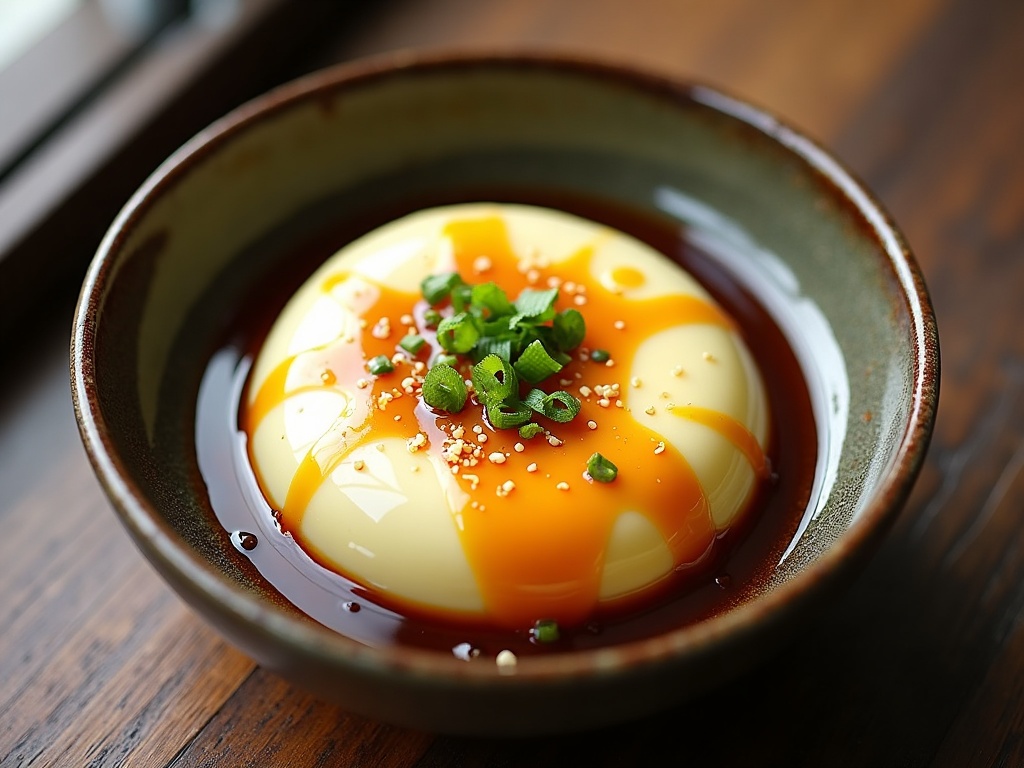
Cantonese steamed egg (蒸水蛋), or savory steamed egg custard, is made by whisking eggs with warm broth or water — about 1 part egg to 1.5 parts liquid — straining out the bubbles, and steaming gently until just set, then finishing with light soy sauce, sesame oil and scallion. It is pure comfort food: soft as silken tofu, barely holding together, spooned over rice. What separates a glass-smooth custard from a spongy, pock-marked one is temperature and steam control. Use warm (not hot, not cold) liquid, strain the mixture into the bowl, cover it so dripping condensation can't pit the surface, and steam over low — not roaring — heat for about 10–12 minutes. Steam it too hard or too long and it turns rubbery and full of holes; treat it gently and it sets like a savory panna cotta.
 Save to Pinterest
Why you'll love this cantonese steamed egg
- Silky, custardy comfort food that costs pennies and takes about 15 minutes.
- Naturally vegetarian and gentle — a favorite with kids and anyone feeling under the weather.
- Needs only eggs and a few pantry seasonings, no special ingredients.
- We give the exact egg-to-liquid ratio and the steam trick for glass-smooth custard with no pockmarks.
Ingredients
Custard
Finish
Missing an ingredient?
AITell us what you have and what you're making — get the best US-grocery swap, with ratios.
Equipment
- Shallow heatproof bowl — A wide, shallow bowl sets evenly and looks the part.(shop →)
- Steamer, or a wok/pot with a rack — Anything that holds the bowl above an inch of simmering water.(shop →)
Instructions
Beat the eggs gently with the salt until just combined — don't whip in air. Measure the beaten egg, then stir in warm stock equal to about 1.5 times that volume.
💡 Warm liquid (body temperature) sets into a smoother custard than cold. Hot liquid will start to scramble the eggs.
Strain the mixture through a fine sieve into your serving bowl. This removes bubbles and the stringy chalaza, and is the single biggest step toward a silky surface.
Skim off any surface foam. Cover the bowl tightly with foil or an inverted plate so condensation from the lid can't drip down and pit the custard.
Steam over LOW heat — a gentle simmer, with the lid set slightly ajar to keep the temperature down — for 10–12 minutes, until just set with a slight wobble in the center.
💡 Low, gentle steam is everything. A hard, rolling boil overheats the custard and fills it with holes. Venting the lid keeps it tender.
Uncover, drizzle with light soy sauce and sesame oil, and scatter the scallion over the top. Serve warm, spooned over rice.
Tips & notes
- The ratio is the recipe: about 1 part beaten egg to 1.5 parts warm liquid gives a custard that's set but still trembling. More liquid = softer; less = firmer.
- Strain and cover. Skipping either is what gives you a bubbly, pock-marked surface instead of a mirror-smooth one.
- If your steam runs hot, prop the lid open a crack. Lower temperature, not longer time, is how you avoid a spongy texture.
- It's done at a slight jiggle in the center — carryover heat finishes it. A knife-clean center means it's already overcooked.
- Make it a meal: nestle a few raw shrimp or peas into the strained custard before steaming.
Recipe wording too vague?
AIPaste any fuzzy step (少许, 火候正好, 焯水) and get exact amounts, temps and times.
Cantonese Steamed Egg
- Prep
- 5 min
- Cook
- 12 min
- Total
- 17 min
- Serves
- 2
- Level
- Beginner
Ingredients
- 3 large eggs
- about 1¼ cups warm chicken or vegetable stock, or water; warm to the touch, not hot — roughly 1.5× the volume of the beaten eggs
- ¼ tsp salt
- 1 tbsp light soy sauce
- 1 tsp toasted sesame oil
- 1 scallion, finely sliced
Instructions
- Beat the eggs gently with the salt until just combined — don't whip in air. Measure the beaten egg, then stir in warm stock equal to about 1.5 times that volume.
- Strain the mixture through a fine sieve into your serving bowl. This removes bubbles and the stringy chalaza, and is the single biggest step toward a silky surface.
- Skim off any surface foam. Cover the bowl tightly with foil or an inverted plate so condensation from the lid can't drip down and pit the custard.
- Steam over LOW heat — a gentle simmer, with the lid set slightly ajar to keep the temperature down — for 10–12 minutes, until just set with a slight wobble in the center.
- Uncover, drizzle with light soy sauce and sesame oil, and scatter the scallion over the top. Serve warm, spooned over rice.
Nutrition (est., per serving): 140 cal · 11 g protein · 3 g carbs · 9 g fat
Cantonese Steamed Egg FAQ
Why is my steamed egg full of holes and bubbles?
Almost always too much heat, or skipping the strain-and-cover steps. A hard boil overheats the custard so it sets spongy and pitted. Strain the mixture to remove air, cover the bowl so condensation can't drip in, and steam over a gentle, low simmer — vent the lid if needed to keep the temperature down.
What is the egg-to-water ratio for steamed egg?
About 1 part beaten egg to 1.5 parts warm liquid by volume. Beat your eggs, measure them, then add one and a half times that amount of warm stock or water. More liquid makes a softer, more delicate custard; less makes it firmer.
Can I use water instead of stock?
Yes. Water makes a clean, light custard; warm chicken or vegetable stock makes it richer and more savory. Either works — just make sure the liquid is warm, not hot or cold, for the smoothest set.
How do I steam egg without a steamer?
Set the bowl on a small metal rack, an inverted heatproof saucer, or a ring of foil inside a wok or large pot. Add an inch of water below the bowl, bring it to a gentle simmer, cover, and steam. The bowl just needs to sit above the water.
How do I know when steamed egg is done?
It's done when the custard is set around the edges but the center still wobbles slightly when you nudge the bowl. Carryover heat finishes the middle. If the center is completely firm, it's slightly overcooked — pull it a touch earlier next time.
You might also like
Get our free Chinese Kitchen Starter Guide
The 12 pantry staples, the 5 techniques, and a week of beginner-friendly dinners — plus a new decoded recipe each week.
Comments
Made this? Have a question or a tweak? Share it below.
No comments yet — be the first!