Soy Sauce Chicken
This post may contain affiliate links. Read our affiliate disclosure.
🧪 Developed & tested by the The Chowmi Test Kitchen for US kitchens. How we develop our recipes.
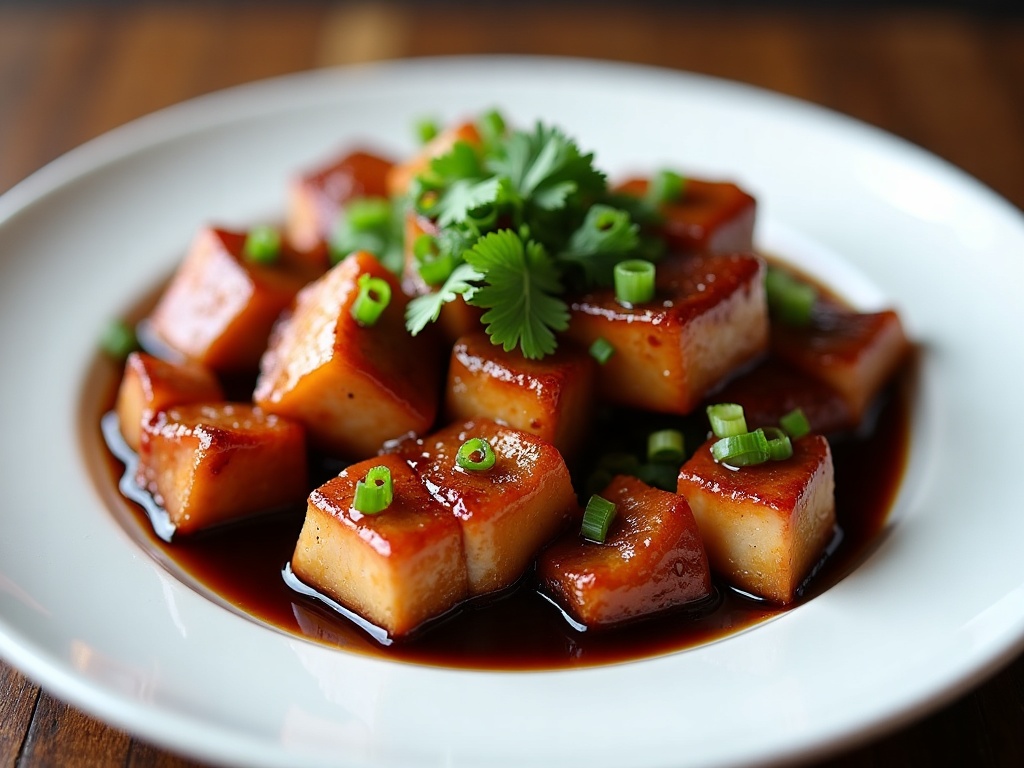
Soy sauce chicken (豉油雞, see yau gai) is a Cantonese roast-meat-shop classic: a whole chicken gently poached in a fragrant 'master stock' of light and dark soy sauce, Shaoxing wine, rock sugar, ginger, scallion and warm spices like star anise, until the meat is silky and the skin is burnished mahogany. The trick is that the chicken is never hard-boiled — it's simmered very gently and then left to steep in the residual heat, which keeps the meat juicy and tender instead of tough and stringy. Dark soy gives the deep color, light soy the savory backbone, and rock sugar a glossy sheen. The poaching liquid becomes a reusable master stock that only deepens each time you cook with it. Serve the chicken chopped Cantonese-style with a little of the reduced sauce spooned over, and rice alongside.
 Save to Pinterest
Why you'll love this soy sauce chicken
- Cantonese roast-meat-shop chicken at home — mahogany, glossy, and silky-tender.
- Gentle poaching makes it nearly impossible to overcook or dry out.
- The master stock is reusable and only gets better, richer, and more fragrant each time.
- We give the exact soy ratio and the steep-off-heat trick for juicy, never rubbery, meat.
Ingredients
Chicken
Master stock
Missing an ingredient?
AITell us what you have and what you're making — get the best US-grocery swap, with ratios.
Hard-to-find ingredients, delivered
Stock the pantry once and you can cook this anytime: Shaoxing wine. Asian groceries deliver nationwide.
Equipment
- Deep pot just large enough to submerge the chicken — A snug pot means less stock needed to cover the bird.(shop →)
- Tongs or a large spider — For turning and lifting the whole chicken without tearing the skin.(shop →)
Instructions
Combine all the master-stock ingredients in a deep pot and bring to a simmer. Let it simmer 10 minutes so the spices and soy meld.
Lower the whole chicken into the stock breast-side down; it should be nearly submerged. Bring back to a bare simmer — small lazy bubbles, never a rolling boil.
💡 A hard boil toughens the meat and splits the skin. Keep it at the gentlest simmer the whole way.
Simmer gently for 25–30 minutes (about 20 for legs), turning the chicken once and spooning stock over any part above the surface so it colors evenly.
Turn off the heat, cover, and let the chicken steep in the hot stock for 20–30 minutes. It finishes cooking gently off the heat and stays juicy. It's done at 165°F (74°C) at the thickest part of the thigh.
💡 This off-heat steep is the secret to silky meat — the residual heat cooks it through without ever toughening it.
Lift the chicken out, brush with a little stock for shine, and rest 10 minutes. Meanwhile, simmer a cup of the stock until slightly syrupy for serving.
Chop Cantonese-style through the bone into bite-size pieces (or carve), arrange on a plate, and spoon the reduced sauce over. Serve with rice.
Tips & notes
- Keep it at a bare simmer, never a boil — gentle heat is the whole difference between silky and rubbery chicken.
- Don't skip the off-heat steep. Pulling the chicken straight from active heat is the usual cause of dry meat.
- Save the master stock: strain it, cool, and refrigerate up to a week or freeze for months. Top it up with a splash of soy, wine and sugar each time you reuse it — it deepens with every batch.
- Dark soy is for color, light soy for salt. Using all dark soy makes it bitter and too dark; all light soy leaves it pale.
- Serve with a classic ginger-scallion oil on the side for the full roast-meat-shop experience.
Recipe wording too vague?
AIPaste any fuzzy step (少许, 火候正好, 焯水) and get exact amounts, temps and times.
Soy Sauce Chicken
- Prep
- 10 min
- Cook
- 35 min
- Total
- 45 min
- Serves
- 4
- Level
- Intermediate
Ingredients
- 1 (about 3.5 lb) whole chicken, or 4 bone-in, skin-on chicken legs
- 1 cup light soy sauce
- ⅓ cup dark soy sauce, for color
- ½ cup Shaoxing wine
- ⅓ cup rock sugar, or brown sugar
- 6 cups water
- 5 slices fresh ginger
- 4 scallions, halved
- 2 star anise
- 1 cinnamon stick
- 3 cloves garlic, smashed
Instructions
- Combine all the master-stock ingredients in a deep pot and bring to a simmer. Let it simmer 10 minutes so the spices and soy meld.
- Lower the whole chicken into the stock breast-side down; it should be nearly submerged. Bring back to a bare simmer — small lazy bubbles, never a rolling boil.
- Simmer gently for 25–30 minutes (about 20 for legs), turning the chicken once and spooning stock over any part above the surface so it colors evenly.
- Turn off the heat, cover, and let the chicken steep in the hot stock for 20–30 minutes. It finishes cooking gently off the heat and stays juicy. It's done at 165°F (74°C) at the thickest part of the thigh.
- Lift the chicken out, brush with a little stock for shine, and rest 10 minutes. Meanwhile, simmer a cup of the stock until slightly syrupy for serving.
- Chop Cantonese-style through the bone into bite-size pieces (or carve), arrange on a plate, and spoon the reduced sauce over. Serve with rice.
Nutrition (est., per serving): 350 cal · 38 g protein · 8 g carbs · 18 g fat
Soy Sauce Chicken FAQ
What's the difference between soy sauce chicken and white cut chicken?
Both are gently poached Cantonese chicken, but soy sauce chicken (see yau gai) is cooked in a seasoned soy master stock that gives it a deep mahogany color and savory flavor, while white cut chicken (bak chit gai) is poached in plain water and served pale, with a ginger-scallion dip on the side. Same gentle technique, very different finish.
Why poach gently instead of boiling?
A rolling boil toughens chicken and tears the skin. A bare, gentle simmer followed by an off-heat steep cooks the meat slowly and evenly, keeping it silky and juicy — the texture Cantonese roast-meat shops are known for. Patience at low heat is the whole technique.
Can I reuse the master stock?
Yes — that's the point of a master stock. Strain it after cooking, cool it quickly, and refrigerate for up to a week or freeze for months. Each time you reuse it, refresh it with a little more soy sauce, Shaoxing wine, sugar and spice. A well-kept master stock gets richer and more complex over time.
Can I use chicken parts instead of a whole chicken?
Definitely. Bone-in, skin-on legs or thighs are easy and forgiving — poach them about 20 minutes, then steep off the heat. Keep the skin on and the bone in for the best flavor and texture; boneless pieces work but cook faster and can dry out.
What do you serve with soy sauce chicken?
Steamed white rice and a simple green vegetable (like blanched gai lan or bok choy) are classic. Spoon some of the reduced master stock over the chicken and rice, and offer ginger-scallion oil on the side. It's also excellent cold the next day.
You might also like
Get our free Chinese Kitchen Starter Guide
The 12 pantry staples, the 5 techniques, and a week of beginner-friendly dinners — plus a new decoded recipe each week.
Comments
Made this? Have a question or a tweak? Share it below.
No comments yet — be the first!