Sweet and Sour Pork
This post may contain affiliate links. Read our affiliate disclosure.
🧪 Developed & tested by the The Chowmi Test Kitchen for US kitchens. How we develop our recipes.
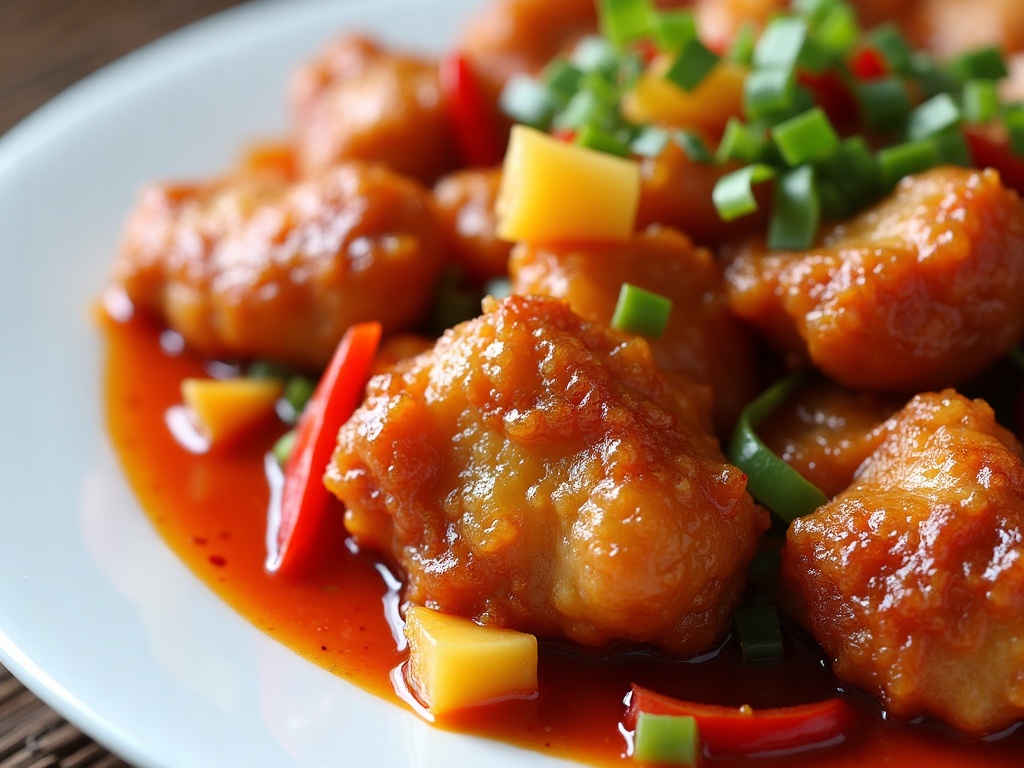
Sweet and sour pork (咕嚕肉, gu lou yuk) is a Cantonese classic of bite-size pork, marinated and coated in starch, deep-fried until crispy, then tossed in a glossy sweet-and-sour sauce with bell peppers, onion and pineapple. The sauce balances sugar against rice vinegar, usually with ketchup (or tomato) for its bright color and tang. Two things make it great: a double fry, which gives a crunch that survives being sauced, and a balanced sauce that's neither cloyingly sweet nor harshly sour. Use pork shoulder for tenderness, fry the coated pieces twice (once to cook, once to crisp), and toss everything together fast at the very end so the coating stays crispy. It's more vibrant and far less gloopy than most takeout versions.
 Save to Pinterest
Why you'll love this sweet and sour pork
- Genuinely crispy pork in a bright, balanced sweet-and-sour sauce — not the gloopy, neon takeout kind.
- The double-fry trick keeps the coating crunchy even after it's sauced.
- Colorful and crowd-pleasing, with peppers and pineapple for sweetness and crunch.
- We balance the sauce so it's tangy and glossy, not just sweet.
Ingredients
Pork & coating
Sweet & sour sauce
Vegetables
Missing an ingredient?
AITell us what you have and what you're making — get the best US-grocery swap, with ratios.
Hard-to-find ingredients, delivered
Stock the pantry once and you can cook this anytime: Shaoxing wine. Asian groceries deliver nationwide.
Equipment
- Wok or deep pot for frying — Deep enough to fry the pork in batches.(shop →)
- Spider or slotted spoon — For lifting the pork out of the oil.(shop →)
Instructions
Marinate the pork cubes with the soy sauce and Shaoxing wine for 15 minutes. Stir the sauce ingredients (except the cornstarch slurry) together, and mix the slurry separately.
Dip the marinated pork in beaten egg, then dredge in cornstarch, pressing so each piece is well coated. Shake off the excess.
Heat the oil to 350°F (175°C). Fry the pork in batches for about 3–4 minutes until pale golden and cooked through, then remove and drain.
Raise the oil to 375°F (190°C) and fry the pork a second time for 1–2 minutes until deep golden and crisp. Drain on a rack. (The second fry is what keeps it crunchy under the sauce.)
💡 The double fry is the secret. The first fry cooks the pork; the second, hotter fry crisps the crust so it doesn't go soggy once sauced.
Pour off all but 1 tbsp oil. Stir-fry the onion and bell pepper over high heat for 1 minute, add the pineapple, then pour in the sauce and bring to a simmer. Stir in the slurry and cook until glossy and thickened.
Add the fried pork, toss quickly to coat in the sauce, and serve immediately — while the coating is still crisp.
💡 Toss and serve fast. The longer the pork sits in the sauce, the softer the crust gets.
Tips & notes
- Double-fry for crunch: once at 350°F to cook, once at 375°F to crisp. It's the difference between crispy and soggy.
- Pork shoulder stays tender and juicy; avoid lean cuts like loin, which dry out when fried.
- Balance the sauce by tasting — it should be brightly tangy from the rice vinegar, not just sweet. Adjust sugar and vinegar to your liking.
- Have everything ready before you build the sauce; once the pork is fried, the final toss takes under two minutes.
- No deep-frying? Shallow-fry in about an inch of oil, turning the pieces, or use plenty of oil in a wok. It won't be quite as even but works.
Recipe wording too vague?
AIPaste any fuzzy step (少许, 火候正好, 焯水) and get exact amounts, temps and times.
Sweet and Sour Pork
- Prep
- 20 min
- Cook
- 20 min
- Total
- 40 min
- Serves
- 4
- Level
- Intermediate
Ingredients
- 1 lb pork shoulder, cut into 1-inch cubes
- 1 tbsp light soy sauce
- 1 tbsp Shaoxing wine
- 1 egg, beaten
- ¾ cup cornstarch, for coating
- 4 cups neutral oil, for frying
- 4 tbsp ketchup
- 3 tbsp rice vinegar
- 3 tbsp sugar
- 1 tbsp light soy sauce
- ⅓ cup water or pineapple juice
- 1 tbsp cornstarch, mixed with 2 tbsp cold water
- 1 bell pepper, cut into chunks
- ½ onion, cut into chunks
- 1 cup pineapple chunks
Instructions
- Marinate the pork cubes with the soy sauce and Shaoxing wine for 15 minutes. Stir the sauce ingredients (except the cornstarch slurry) together, and mix the slurry separately.
- Dip the marinated pork in beaten egg, then dredge in cornstarch, pressing so each piece is well coated. Shake off the excess.
- Heat the oil to 350°F (175°C). Fry the pork in batches for about 3–4 minutes until pale golden and cooked through, then remove and drain.
- Raise the oil to 375°F (190°C) and fry the pork a second time for 1–2 minutes until deep golden and crisp. Drain on a rack. (The second fry is what keeps it crunchy under the sauce.)
- Pour off all but 1 tbsp oil. Stir-fry the onion and bell pepper over high heat for 1 minute, add the pineapple, then pour in the sauce and bring to a simmer. Stir in the slurry and cook until glossy and thickened.
- Add the fried pork, toss quickly to coat in the sauce, and serve immediately — while the coating is still crisp.
Nutrition (est., per serving): 520 cal · 26 g protein · 48 g carbs · 24 g fat
Sweet and Sour Pork FAQ
How do you keep sweet and sour pork crispy?
Fry the pork twice — once at a moderate 350°F to cook it through, then again at a hotter 375°F to crisp the crust — and toss it in the sauce only at the very last moment before serving. A cornstarch-based coating and a hot second fry give a crunch that holds up; letting the pork sit in the sauce is what turns it soggy.
What cut of pork is best for sweet and sour pork?
Pork shoulder (pork butt) is ideal — it has enough fat to stay tender and juicy through frying. Pork tenderloin or loin can be used for a leaner version, but they dry out more easily, so don't overcook them. Cut the pork into even 1-inch cubes so they fry uniformly.
What gives sweet and sour sauce its red color?
In most home and restaurant versions, ketchup (or tomato paste) provides both the red color and part of the tang. Some traditional recipes use a little fermented red bean curd or, less ideally, food coloring. The balance of sugar and rice vinegar is what makes it taste sweet and sour; the ketchup mainly adds color and body.
Can I make sweet and sour pork without deep-frying?
Yes, though the texture is a bit different. Shallow-fry the coated pork in about an inch of oil, turning to brown all sides, or pan-fry until crisp. You can even bake or air-fry the coated pieces for a lighter version. The sauce and assembly stay the same; you just won't get quite the same all-over crunch.
Is pineapple traditional in sweet and sour pork?
Pineapple is very common and adds sweetness and a juicy contrast, and its juice is often used in the sauce. That said, some traditional Cantonese versions skip it. Include it if you like the fruit-and-pork combination; leave it out for a more savory, vegetable-forward dish.
You might also like
Get our free Chinese Kitchen Starter Guide
The 12 pantry staples, the 5 techniques, and a week of beginner-friendly dinners — plus a new decoded recipe each week.
Comments
Made this? Have a question or a tweak? Share it below.
No comments yet — be the first!