Hunan Beef
This post may contain affiliate links. Read our affiliate disclosure.
🧪 Developed & tested by the The Chowmi Test Kitchen for US kitchens. How we develop our recipes.
Hunan beef is a popular American-Chinese restaurant dish: tender slices of beef stir-fried with vegetables in a spicy, garlicky brown sauce with dried red chilies. On US menus, 'Hunan style' signals heat plus a savory-spicy sauce, and it's usually served saucier and with more mixed vegetables than authentic Hunan cooking — which tends to be drier, smokier, and built on fresh chilies. This home version keeps what people love about the takeout dish (silky velveted beef, broccoli and peppers, a glossy chili-garlic sauce) while cutting the oil and salt. Expect real heat from dried chilies and a little chili-bean paste, balanced by garlic, ginger, and a touch of sugar. It comes together in about 30 minutes. If you'd rather cook the authentic Hunan experience, try our Hunan pork with chilies, which is drier and built on fresh green chilies.
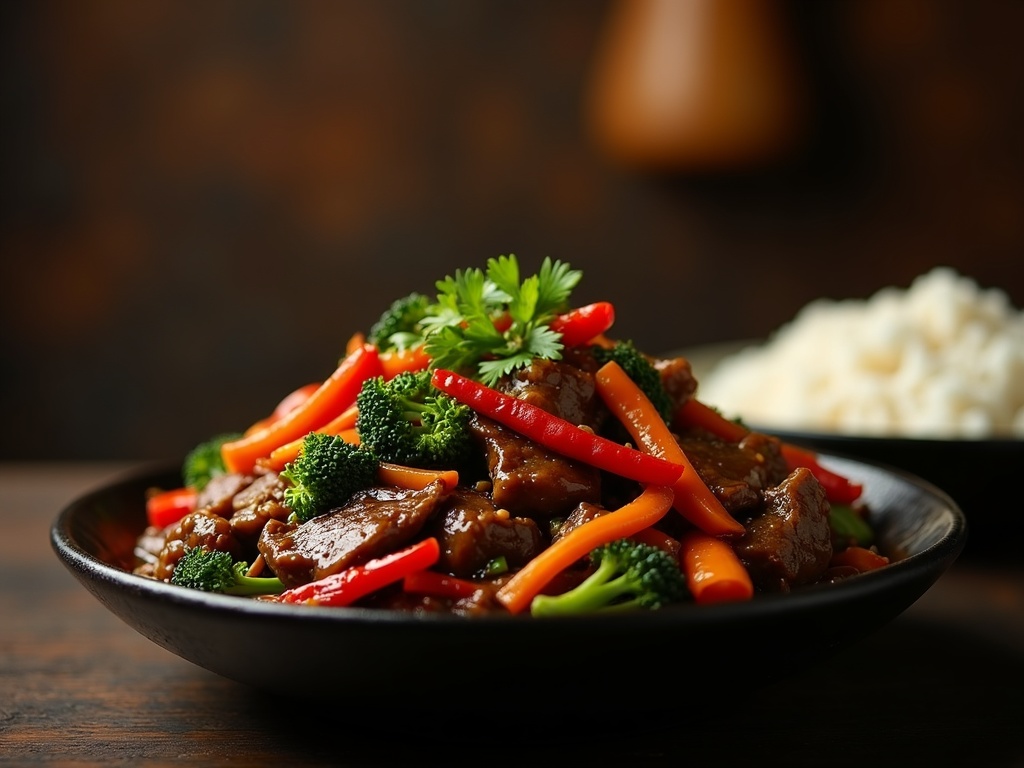 Save to Pinterest
Why you'll love this hunan beef
- Better than takeout: silky beef and crisp vegetables in a bold chili-garlic sauce, for a fraction of the cost.
- The velveting trick (baking soda + cornstarch) gives you that restaurant-tender beef every time.
- One adjustable sauce — dial the dried chilies and chili-bean paste up or down to your heat tolerance.
- Honest about authenticity: we explain how this takeout favorite differs from real Hunan cooking.
Ingredients
Beef & velvet marinade
Sauce
Stir-fry
Missing an ingredient?
AITell us what you have and what you're making — get the best US-grocery swap, with ratios.
Hard-to-find ingredients, delivered
Stock the pantry once and you can cook this anytime: Shaoxing wine, oyster sauce, doubanjiang, Chinkiang black vinegar. Asian groceries deliver nationwide.
Equipment
- Wok or large skillet — High heat keeps the beef seared and the vegetables crisp.(shop →)
Instructions
Velvet the beef
Slice the beef thin against the grain. Toss with the baking soda first, then the soy, Shaoxing wine, cornstarch, and water. Massage until the liquid is absorbed and let sit 15 minutes — this is velveting, and it's what makes the beef silky.
💡 The baking soda gently tenderizes; rinse it off after 15 minutes only if you used more than ¼ tsp, or just proceed — this amount won't taste of soda.
Mix the sauce
Stir together all the sauce ingredients in a small bowl until the cornstarch dissolves. Prep the vegetables and aromatics.
Blanch the broccoli and carrot in boiling water for 60 seconds, then drain. (Or microwave with a splash of water for 90 seconds.) This guarantees crisp-tender vegetables without overcooking the beef.
💡 Skipping the blanch is the #1 reason home stir-fries come out with raw-ish broccoli and overcooked beef.
Sear the beef
Heat 2 tbsp oil in a wok over high until just smoking. Add the beef in a single layer, sear undisturbed 1 minute, then stir-fry just until it loses its raw color, about 1 minute more. Remove to a plate — it will finish later.
Bloom the aromatics
Add the last 1 tbsp oil to the wok, lower to medium-high, and add the dried chilies, garlic, and ginger. Stir 20–30 seconds until fragrant (don't scorch the chilies).
Combine
Add the bell pepper and the blanched broccoli and carrot; stir-fry on high for 1–2 minutes. Return the beef, give the sauce a stir, and pour it in.
Finish
Toss everything for 1–2 minutes until the sauce thickens and coats the beef and vegetables in a glossy sheen. Serve immediately over steamed rice.
Tips & notes
- Slicing against the grain is non-negotiable for tender beef — look for the lines in the meat and cut across them. Freezing the steak 20 minutes makes thin slicing easier.
- Real Hunan cooking rarely uses this kind of thick brown sauce; on US menus 'Hunan' just means 'spicy.' For an authentic counterpart, see our Hunan pork with chilies.
- For more heat the Hunan way, add a couple of sliced fresh red chilies with the bell pepper, in addition to the dried ones.
- Make it gluten-free by using tamari in place of soy sauce and checking that your oyster sauce and chili-bean paste are wheat-free.
- No doubanjiang? Use 1 tablespoon of chili-garlic sauce or sambal plus an extra ½ tsp soy; it won't be identical but keeps the savory heat.
Recipe wording too vague?
AIPaste any fuzzy step (少许, 火候正好, 焯水) and get exact amounts, temps and times.
Hunan Beef
- Prep
- 15 min
- Cook
- 12 min
- Total
- 27 min
- Serves
- 4
- Level
- Beginner
Ingredients
- 1 lb flank or sirloin steak, sliced thin against the grain
- ¼ tsp baking soda
- 1 tbsp light soy sauce
- 1 tbsp Shaoxing wine
- 1 tbsp cornstarch
- 1 tbsp water
- 2 tbsp light soy sauce
- 1 tbsp oyster sauce
- 1 tbsp doubanjiang (chili-bean paste)
- 1 tsp Chinkiang black vinegar
- 1 tsp sugar
- 1 tsp cornstarch
- ⅓ cup water or unsalted beef stock
- 2 cups broccoli florets, cut small
- 1 red bell pepper, cut into bite-size pieces
- 1 carrot, thinly sliced on the bias
- 6–8 dried red chilies, snipped, seeds shaken out for less heat
- 4 cloves garlic, minced
- 1 tbsp ginger, minced
- 3 tbsp neutral oil, divided
Instructions
- Slice the beef thin against the grain. Toss with the baking soda first, then the soy, Shaoxing wine, cornstarch, and water. Massage until the liquid is absorbed and let sit 15 minutes — this is velveting, and it's what makes the beef silky.
- Stir together all the sauce ingredients in a small bowl until the cornstarch dissolves. Prep the vegetables and aromatics.
- Blanch the broccoli and carrot in boiling water for 60 seconds, then drain. (Or microwave with a splash of water for 90 seconds.) This guarantees crisp-tender vegetables without overcooking the beef.
- Heat 2 tbsp oil in a wok over high until just smoking. Add the beef in a single layer, sear undisturbed 1 minute, then stir-fry just until it loses its raw color, about 1 minute more. Remove to a plate — it will finish later.
- Add the last 1 tbsp oil to the wok, lower to medium-high, and add the dried chilies, garlic, and ginger. Stir 20–30 seconds until fragrant (don't scorch the chilies).
- Add the bell pepper and the blanched broccoli and carrot; stir-fry on high for 1–2 minutes. Return the beef, give the sauce a stir, and pour it in.
- Toss everything for 1–2 minutes until the sauce thickens and coats the beef and vegetables in a glossy sheen. Serve immediately over steamed rice.
Nutrition (est., per serving): 330 cal · 27 g protein · 14 g carbs · 18 g fat
Hunan Beef FAQ
What is Hunan beef?
Hunan beef is an American-Chinese restaurant dish of thinly sliced beef stir-fried with mixed vegetables in a spicy, garlicky brown sauce with dried red chilies. The 'Hunan' label on US menus mainly signals heat; it's saucier and more vegetable-heavy than the food actually cooked in Hunan province, which tends to be drier and built on fresh chilies.
What's the difference between Hunan beef and Szechuan (Sichuan) beef?
Both are spicy, but Sichuan beef typically uses Sichuan peppercorns for a tingling, numbing 'málà' heat and chili-bean paste, while Hunan beef leans on dried and fresh chilies for a cleaner, purely hot-and-savory flavor without the numbing. On US menus the two overlap a lot; the biggest tell is whether you taste that lip-tingling Sichuan peppercorn.
How do I get the beef tender like a restaurant?
Velvet it: toss thinly sliced beef with a little baking soda, then a marinade of soy, Shaoxing wine, cornstarch, and water, and let it sit 15 minutes before searing over high heat. The baking soda tenderizes and the cornstarch forms a silky coating that protects the beef from drying out.
Is this authentic Hunan food?
Not exactly — it's a delicious takeout-style dish inspired by Hunan's reputation for heat, not a dish you'd typically find in a Hunan home. Authentic Hunan cooking is drier and smokier and uses fresh chilies as a main ingredient. For the real thing, try our Hunan pork with chilies (辣椒炒肉).
Can I make Hunan beef less spicy?
Yes. Shake the seeds out of the dried chilies (or use fewer), and cut the doubanjiang to 1–2 teaspoons. The sauce stays savory and glossy with just a gentle warmth. You can also add a teaspoon more sugar to round out the heat.
You might also like
Get our free Chinese Kitchen Starter Guide
The 12 pantry staples, the 5 techniques, and a week of beginner-friendly dinners — plus a new decoded recipe each week.
Comments
Made this? Have a question or a tweak? Share it below.
No comments yet — be the first!