What Is Moo Shu Pork?
By The Chowmi Test Kitchen · Updated June 12, 2026
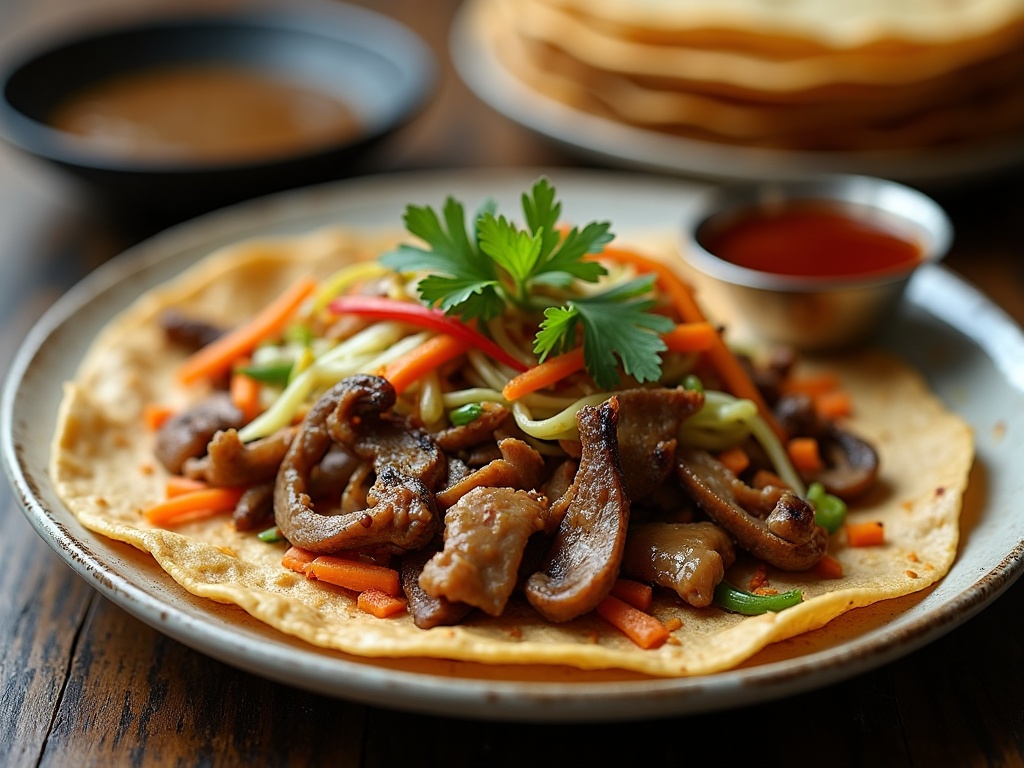
Moo shu pork (木须肉, mù xū ròu) is a northern Chinese stir-fry of thin-sliced pork, scrambled egg, wood ear mushrooms, and shredded cabbage or other vegetables, seasoned simply with soy sauce, ginger and garlic. The American-Chinese version is famous for how it's served: you spread a little hoisin sauce on a thin, soft Mandarin pancake (similar to a crepe or a Peking-duck wrap), pile in the stir-fry, roll it up, and eat it by hand. The name refers to the scrambled egg, whose soft yellow flecks were thought to resemble the blossoms of the sweet osmanthus (mù xī) flower. It's light, savory, and quick — not battered or deep-fried — which makes it one of the gentler takeout dishes. In China it's often served without pancakes, simply over rice; the pancake-and-hoisin presentation is the version most familiar in the US.
What's in moo shu pork
At its core, moo shu pork is a fast stir-fry. Thin strips of pork are cooked with scrambled egg, rehydrated wood ear mushrooms (for their springy crunch), and shredded vegetables — traditionally cabbage, and often day-lily buds and bamboo shoots, with scallions and ginger. The seasoning is restrained: soy sauce, a splash of rice wine, and aromatics, letting the egg and mushrooms shine. It's a great way to use up odds and ends, which is part of its homey, northern-Chinese character.
Why the pancakes and hoisin
The hallmark of restaurant moo shu pork is the serving ritual: thin, soft Mandarin pancakes (báobǐng) brushed with sweet hoisin sauce, filled with the stir-fry, and rolled up like a wrap. It mirrors how Peking duck is served, which is why the two can look similar. The sweet hoisin balances the savory filling, and the soft pancake makes it a hand-held meal. In northern China, moo shu is just as often eaten plain over rice — the pancakes are a refinement, not a requirement.
Where the name comes from
"Moo shu" (mù xū / 木须) is widely understood to refer to the scrambled egg in the dish. The soft, golden flecks of egg were poetically likened to the tiny yellow blossoms of the sweet osmanthus tree (guìhuā, also called mùxī), so the dish's name evokes those flowers. You'll see it romanized as moo shu, mu shu, or moo shi — all the same dish. It's a northern dish that became a staple of American-Chinese menus.
Is moo shu pork healthy, and how to make it
Moo shu is one of the lighter takeout choices: it's a vegetable-and-egg-forward stir-fry that isn't battered or deep-fried, so it's lower in oil and refined carbs than many menu items (the pancakes and hoisin add some). To make a version at home, stir-fry thin pork with scrambled egg, rehydrated wood ear, and shredded cabbage; season with soy, ginger and garlic; and serve over rice or in warm flour tortillas brushed with hoisin if you don't have Mandarin pancakes. It comes together in about 20 minutes.
What Is Moo Shu Pork? FAQ
What is moo shu pork?
Moo shu pork is a Chinese stir-fry of thin-sliced pork, scrambled egg, wood ear mushrooms and shredded cabbage, seasoned with soy sauce and aromatics. In the American-Chinese version it's served with thin pancakes and hoisin sauce: you spread hoisin on a pancake, add the filling, and roll it up to eat by hand. It's a light, non-fried dish.
What does moo shu pork taste like?
Savory, light, and a little eggy, with the springy crunch of wood ear mushrooms and the freshness of cabbage. On its own the stir-fry is mildly seasoned with soy, ginger and garlic. Wrapped in a pancake with sweet hoisin sauce, it gains a sweet-savory contrast — the hoisin is what gives the familiar takeout version its signature flavor.
Why is it called moo shu?
"Moo shu" (mù xū) is generally understood to refer to the scrambled egg in the dish, whose soft yellow flecks were likened to the small blossoms of the sweet osmanthus flower (mùxī). So the name poetically evokes those flowers. It's spelled various ways — moo shu, mu shu, moo shi — but they all mean the same dish.
What's the difference between moo shu pork and lo mein?
They're very different. Moo shu pork is a pancake-wrapped stir-fry of pork, egg, mushroom and cabbage — no noodles. Lo mein is a noodle dish: soft wheat noodles tossed in a savory sauce with vegetables and protein. Moo shu is eaten in pancakes or over rice; lo mein is a bowl of saucy noodles.
Is moo shu pork gluten-free?
Usually not, for two reasons: the soy sauce contains wheat, and the pancakes are made from wheat flour (and hoisin can contain wheat too). The stir-fry itself can be made gluten-free with tamari and a gluten-free hoisin, served over rice instead of pancakes. Always check, since restaurant versions use regular soy sauce and flour pancakes.
Recipes to try this with
Get our free Chinese Kitchen Starter Guide
The 12 pantry staples, the 5 techniques, and a week of beginner-friendly dinners — plus a new decoded recipe each week.