What Are Bao Buns? A Beginner's Guide
By The Chowmi Test Kitchen · Updated October 30, 2026
Bao (包) are soft, fluffy Chinese steamed buns made from a slightly sweet, leavened wheat dough — "bao" means "bun" or "to wrap." They come filled (baozi) or plain (mantou), and the dough's pillowy, white, cloud-like texture is the signature. The most familiar types are char siu bao, round buns stuffed with sweet barbecue pork; gua bao, a flat folded "bao taco" that sandwiches braised pork belly and toppings; sheng jian bao, pan-fried soup buns with a crispy bottom; and tangbao or xiao long bao, thin-skinned soup dumplings (a dumpling cousin rather than a fluffy bun). Most bao are steamed in bamboo baskets, which keeps them light and snowy. Fillings range from savory (pork, chicken, vegetables) to sweet (red bean, custard, lotus paste). You eat them with your hands, and they're a staple of dim sum and street food across China and Taiwan.
On this page
What 'bao' actually means
Bao (包) literally means "to wrap" or "bun," and refers to buns made from a leavened, lightly sweet wheat dough that's steamed until soft and fluffy. Filled buns are baozi; plain unfilled buns are mantou, eaten like bread. The dough is what makes a bao a bao — pale, pillowy, and slightly sweet — as opposed to a dumpling, which uses thin, unleavened wrappers. If it's soft and bread-like, it's a bao; if it's a thin skin around filling, it's a dumpling.
What bao buns are made of
The dough is four ingredients and one decision. Flour, water, yeast and a little sugar make the base; the decision is which flour. Chinese bakers reach for a low-protein flour — often sold as bao flour, otherwise cake flour — because it steams up soft and very white, which is the look people expect. Use bread flour and you get a chewier bun with a creamier color; it isn't wrong, it just isn't what a dim sum trolley looks like.
Most recipes then add a spoonful of fat for tenderness (lard traditionally, neutral oil or milk just as often), and many add a little baking powder alongside the yeast so the bun puffs hard in the steamer and holds its loft as it cools. Nothing here is baked, with one exception: the golden-topped Cantonese char siu bao, which goes in an oven and gets a sweet, cookie-like crust.
The filling is where the variety lives — char siu pork, minced pork with cabbage, chicken and shiitake, curried beef, and on the sweet side red bean, lotus seed paste or salted-egg custard.
The main types of bao
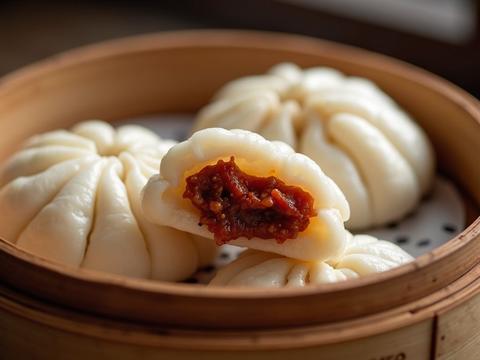
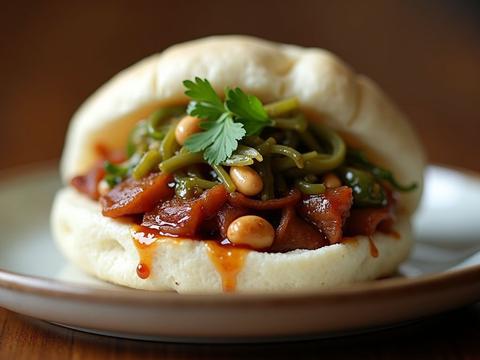
A few types cover most of what you'll meet. Char siu bao are round, fluffy buns filled with sweet-savory barbecue pork — a dim sum icon, available steamed (white) or baked (golden). Gua bao are flat, folded buns — a soft "bao taco" — that hold braised pork belly, pickles, peanuts and cilantro, hugely popular as Taiwanese street food. Sheng jian bao are pan-fried buns with a crispy bottom and a juicy, soup-filled pork center. And nai wong bao are sweet custard buns for dessert. Each starts from the same fluffy dough.
The table sorts out the names you'll see on menus and in freezer aisles, including the two that aren't fluffy buns at all.
| Bao | Chinese | How it's cooked | Usual filling |
|---|---|---|---|
| Char siu bao | 叉烧包 | Steamed (white and split on top) or baked (golden) | Sweet-savory barbecue pork |
| Gua bao | 刈包 | Steamed flat, then folded like a taco | Braised pork belly, pickled mustard greens, peanuts, cilantro |
| Sheng jian bao | 生煎包 | Pan-fried until the bottom is crisp, then steamed in the pan | Pork with a little soup inside |
| Nai wong bao | 奶黄包 | Steamed | Sweet egg custard |
| Dou sha bao | 豆沙包 | Steamed | Sweet red bean paste |
| Mantou | 馒头 | Steamed | None: a plain bun eaten like bread |
| Xiao long bao | 小笼包 | Steamed in small baskets | Pork and soup in a thin skin: a soup dumpling, not a fluffy bun |
How bao are cooked and eaten
Most bao are steamed in stacked bamboo baskets, which is what gives them their light, white, cloud-like texture without browning. Sheng jian bao are the exception — pan-fried to crisp the bottom. You eat bao with your hands, often as part of a dim sum spread with tea, or as a quick street-food snack or breakfast. Steamed bao reheat beautifully, so they're sold frozen everywhere and are a great make-ahead food.
Bao vs dumplings vs bread
It's easy to mix them up. A bao is a fluffy, leavened steamed bun (bread-like dough); a dumpling uses a thin, unleavened wrapper around filling; and a soup dumpling (xiao long bao), despite the "bao" in its name, is really a thin-skinned dumpling, not a fluffy bun. Think of it by the dough: bread-soft and risen means bao; thin and chewy means dumpling. Both are wrapped, both can be filled, but the dough tells you which is which.
What Are Bao Buns? A Beginner's Guide FAQ
What are bao buns?
Bao buns are soft, fluffy Chinese steamed buns made from a slightly sweet, leavened wheat dough. They can be filled (baozi) — like char siu bao with barbecue pork — or plain (mantou). The pillowy, white, bread-like texture is their signature, and most are steamed in bamboo baskets. They're a staple of dim sum and street food.
What are bao buns made of?
Flour, water, yeast, sugar and usually a spoonful of fat — that's the whole dough. The detail that matters is the flour: a low-protein flour (bao flour, or cake flour) steams up soft and very white, which is the texture and color people associate with dim sum, while bread flour gives a chewier, creamier bun. Many recipes add a little baking powder alongside the yeast so the bun puffs hard and stays fluffy once it cools. Fillings are separate — pork, chicken, vegetables, or sweet pastes like red bean and custard.
Do you eat bao buns with your hands?
Yes, and with no ceremony attached. At dim sum you lift one out of the shared steamer with chopsticks or a serving spoon, then eat it from your hand. A folded gua bao is handled like a taco and eaten over the plate, because braised pork belly drips. The one convention worth knowing is not to put a half-eaten bun back into the shared basket.
What's the difference between bao and baozi?
They're the same word at different lengths. 包 (bāo) means "to wrap" or "bun"; 包子 (bāozi) is the everyday Chinese noun for a filled steamed bun, with 子 acting as a common noun suffix. In China you'd order baozi. "Bao buns," the phrase that took hold in English, is a mild redundancy — it means "bun buns" — but it's the standard term outside China now and nobody will blink at it.
Are bao buns Chinese, Japanese or Vietnamese?
Chinese, with widely eaten descendants. Steamed filled buns originate in China and spread across Asia: Japan's nikuman and Vietnam's bánh bao are both direct adaptations, and the Filipino siopao comes from the same Hokkien root. Gua bao, the folded style most Western restaurants serve, is Fujianese and became famous by way of Taiwan — so a "bao bun" on a London or New York menu is usually Taiwanese in style even when the restaurant isn't.
Where do bao buns come from?
Steamed wheat buns belong to northern China, where wheat rather than rice is the staple. Folk history credits the plain bun (mantou) to the third-century strategist Zhuge Liang, who is said to have offered bread shaped like heads in place of real ones at a river crossing — a legend rather than a record, but it tells you how old the food feels to Chinese cooks. Filled baozi travelled south and became a dim sum fixture in Guangdong, while gua bao came out of Fujian and made its name in Taiwan.
What fillings go in bao buns?
Savory ones dominate: char siu (sweet barbecue pork), minced pork with cabbage or pickled greens, chicken and shiitake, curried beef, and in gua bao a slab of braised pork belly with pickles and crushed peanuts. Sweet bao are a real category too — red bean paste, lotus seed paste, black sesame, and the salted-egg custard buns (nai wong bao) that dim sum regulars order by default. Vegetable bao with mushroom, cabbage and tofu turn up anywhere with a Buddhist vegetarian tradition.
What's the difference between bao and dumplings?
The dough. Bao use a thick, leavened, bread-like dough that's steamed until fluffy, while dumplings use a thin, unleavened wrapper around filling. If it's soft and bread-like, it's a bao; if it's a thin skin around a filling, it's a dumpling. Soup dumplings (xiao long bao) are actually dumplings despite the name.
What is char siu bao?
Char siu bao is the most famous filled bao — a round, fluffy steamed (or baked) bun stuffed with sweet-savory char siu, or Chinese barbecue pork. It's a dim sum classic, soft and pillowy on the outside with a sticky, savory-sweet pork filling inside. The baked version has a golden, slightly sweet crust.
What is gua bao?
Gua bao is a flat, folded bao — sometimes called a "bao taco" or "pork belly bun." The soft steamed bun is folded around braised pork belly, pickled mustard greens, crushed peanuts, and cilantro. It originated as Taiwanese street food and has become popular worldwide for its mix of soft bun, rich pork, and tangy-crunchy toppings.
Are bao buns healthy?
Better than their reputation in one way, worse in another. Steaming means no frying and no browning, and a bun is a naturally portioned thing — you eat one or two, not a plateful. But the dough is refined white flour with sugar in it, and the popular fillings (char siu, pork belly) are fatty and sweet. If that's how you're choosing, vegetable bao and plain mantou sit at the lighter end and gua bao sits at the rich end.
Are bao buns vegetarian?
Some are. The bun dough itself is typically vegetarian (flour, water, yeast, sugar, a little fat), and there are vegetable bao filled with mushrooms, cabbage, or tofu, plus sweet ones like red bean and custard. But many bao are filled with pork, chicken, or barbecue meat, so check the filling — the bun being plant-based doesn't mean the filling is.
Recipes to try this with
Get our free Chinese Kitchen Starter Guide
The 12 pantry staples, the 5 techniques, and a week of beginner-friendly dinners — plus a new decoded recipe each week.