Taiwanese Beef Noodle Soup
This post may contain affiliate links. Read our affiliate disclosure.
🧪 Developed & tested by the The Chowmi Test Kitchen for US kitchens. How we develop our recipes.
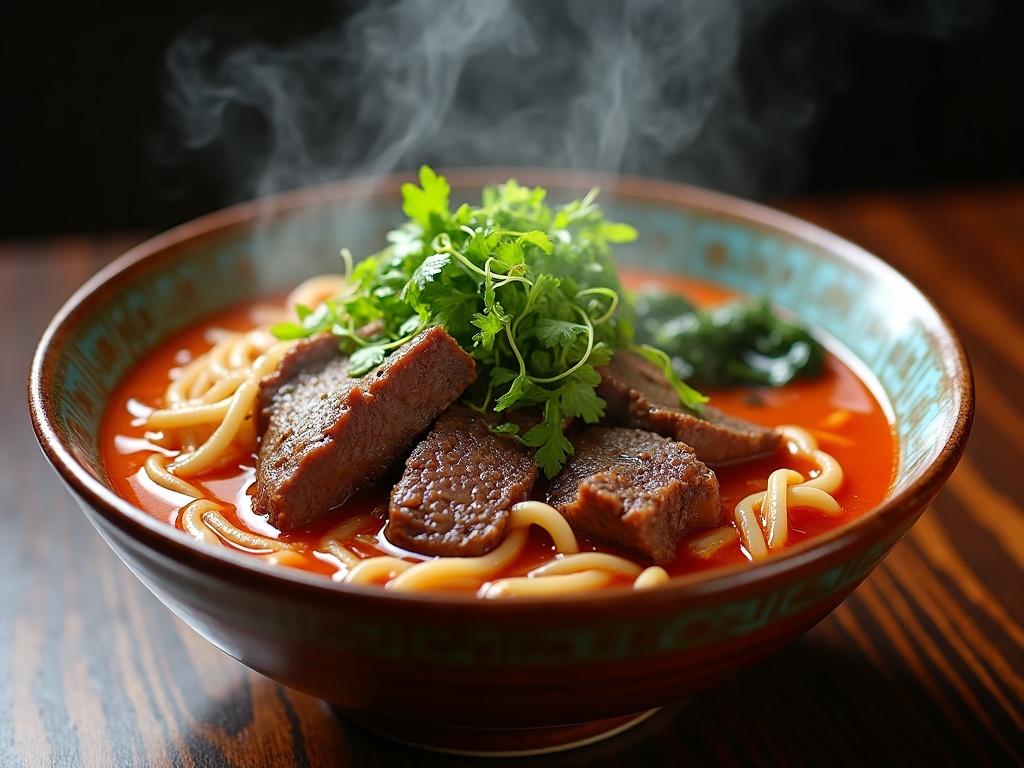
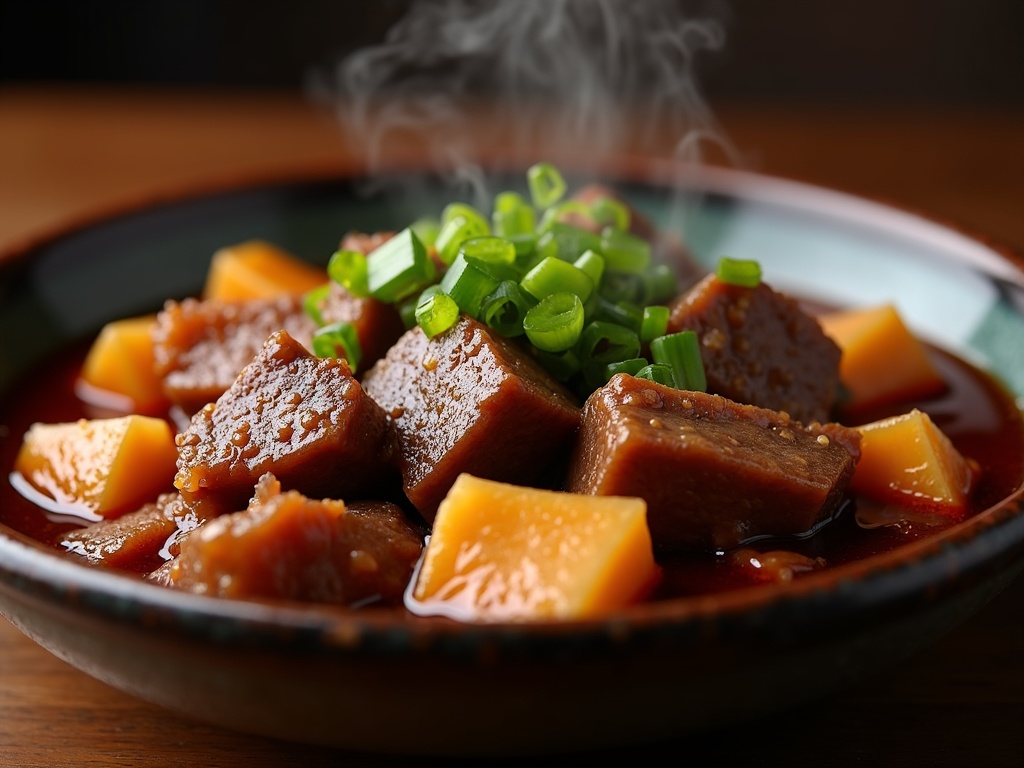
Taiwanese beef noodle soup (牛肉麵, niú ròu miàn) is widely considered Taiwan's national dish: chunks of tender braised beef shank and tendon in a deep, aromatic broth, ladled over chewy wheat noodles and topped with pickled mustard greens and scallions. The broth is the heart of it — beef browned for depth, then simmered with doubanjiang (spicy bean paste), soy sauce, tomato, rock sugar, and a sachet of warm spices (star anise, cinnamon, Sichuan peppercorn) until it's rich, savory, and lightly spicy. The two keys are browning the beef and aromatics hard before adding liquid, and braising low and slow (about 2 hours) so the shank turns spoon-tender. It's a project worth making a big pot of, since it's even better the next day and freezes well. Serve with blanched greens and a spoonful of chili oil.
 Save to Pinterest
Why you'll love this taiwanese beef noodle soup
- Taiwan's national dish — spoon-tender beef in a deep, spiced, savory broth.
- A big-batch project that's even better the next day and freezes beautifully.
- The browning-and-braising method builds restaurant-level richness at home.
- Every hard-to-find ingredient flagged with a tested US-grocery substitute.
Ingredients
Beef & browning
Broth
Spice sachet & to serve
Missing an ingredient?
AITell us what you have and what you're making — get the best US-grocery swap, with ratios.
Hard-to-find ingredients, delivered
Stock the pantry once and you can cook this anytime: doubanjiang, Shaoxing wine, star anise, Sichuan peppercorns. Asian groceries deliver nationwide.
Equipment
- Heavy pot or Dutch oven — For browning and the long braise. An Instant Pot cuts the time to ~45 min.(shop →)
- Spice bag or tea filter — Keeps the whole spices easy to remove.(shop →)
Instructions
Blanch the beef
Blanch the beef: cover with cold water, bring to a boil for 2 minutes, then drain and rinse off the scum. This keeps the broth clean and clear.
💡 Blanching first is the secret to a clean-tasting broth — it removes the impurities that make soup cloudy and off.
Brown beef & aromatics
Heat the oil in a heavy pot over medium-high. Brown the beef chunks on a couple of sides, then push aside and add the onion, garlic, ginger, and tomatoes; cook 3–4 minutes until fragrant and softened.
Bloom the bean paste
Stir in the doubanjiang and cook 1 minute until it darkens and smells fragrant. Add the soy sauces, Shaoxing wine, and rock sugar, and stir to coat.
💡 Frying the doubanjiang before adding liquid is what gives the broth its deep, savory base — don't rush it.
Braise low and slow
Add the water/stock and the spice sachet (star anise, cinnamon, Sichuan peppercorn, bay). Bring to a boil, then reduce to a low simmer, cover, and braise 2 hours until the beef is spoon-tender. (Instant Pot: 45 minutes high pressure, natural release.)
Assemble the bowls
Near serving, cook the noodles in a separate pot of boiling water and blanch the greens. Divide noodles among bowls, ladle over the beef and broth, and top with greens, pickled mustard greens, and scallions.
Tips & notes
- Beef shank is traditional and ideal — it has connective tissue that turns silky and tender over a long braise. Chuck or short rib also work; avoid lean cuts that dry out.
- Always cook the noodles separately and add them to the bowl at the end. Cooking them in the broth makes it starchy and the noodles go soft.
- It's better the next day — the flavors deepen overnight. Make the beef and broth ahead and just boil noodles to serve.
- Control the heat with the doubanjiang and a final spoon of chili oil; the base braise can be mild and you add heat per bowl.
- Freeze the beef and broth (without noodles) for up to 3 months — it's a fantastic make-ahead meal.
Recipe wording too vague?
AIPaste any fuzzy step (少许, 火候正好, 焯水) and get exact amounts, temps and times.
Taiwanese Beef Noodle Soup
- Prep
- 20 min
- Cook
- 2 hr
- Total
- 2 hr 20 min
- Serves
- 4
- Level
- Intermediate
Ingredients
- 2.5 lb beef shank or chuck, cut into 2-inch chunks
- 2 tbsp neutral oil
- 1 yellow onion, quartered
- 6 cloves garlic, smashed
- 2-inch ginger, sliced
- 2 tomatoes, quartered
- 3 tbsp doubanjiang, spicy fermented bean paste
- ⅓ cup light soy sauce
- 1 tbsp dark soy sauce
- 2 tbsp Shaoxing wine
- 1 tbsp rock sugar, or brown sugar
- 8 cups water or beef stock
- 2 star anise
- 1 cinnamon stick
- 1 tsp Sichuan peppercorns
- 2 bay leaves
- 1 lb fresh wheat noodles, thick, chewy
- 2 cups baby bok choy or greens, blanched
- to taste pickled mustard greens & scallions, for topping
Instructions
- Blanch the beef: cover with cold water, bring to a boil for 2 minutes, then drain and rinse off the scum. This keeps the broth clean and clear.
- Heat the oil in a heavy pot over medium-high. Brown the beef chunks on a couple of sides, then push aside and add the onion, garlic, ginger, and tomatoes; cook 3–4 minutes until fragrant and softened.
- Stir in the doubanjiang and cook 1 minute until it darkens and smells fragrant. Add the soy sauces, Shaoxing wine, and rock sugar, and stir to coat.
- Add the water/stock and the spice sachet (star anise, cinnamon, Sichuan peppercorn, bay). Bring to a boil, then reduce to a low simmer, cover, and braise 2 hours until the beef is spoon-tender. (Instant Pot: 45 minutes high pressure, natural release.)
- Near serving, cook the noodles in a separate pot of boiling water and blanch the greens. Divide noodles among bowls, ladle over the beef and broth, and top with greens, pickled mustard greens, and scallions.
Nutrition (est., per serving): 620 cal · 45 g protein · 58 g carbs · 22 g fat
Taiwanese Beef Noodle Soup FAQ
What is Taiwanese beef noodle soup?
It's a braised beef noodle soup considered Taiwan's national dish: tender chunks of braised beef shank in a deep, aromatic broth flavored with doubanjiang (spicy bean paste), soy sauce, tomato, and warm spices, served over chewy wheat noodles with greens and pickled mustard greens. There's a clear-broth version too, but the rich, lightly spicy red-braised style is the most famous.
What cut of beef is best for beef noodle soup?
Beef shank is the classic choice — its connective tissue and tendon break down into silky, spoon-tender meat over a long braise. Boneless beef chuck or short rib also work well. Avoid lean cuts like sirloin, which turn dry and stringy rather than tender during the long cooking.
Can I make beef noodle soup in an Instant Pot?
Yes — it's a great shortcut. Do the blanching, browning, and bean-paste step using sauté mode, then pressure-cook the beef and broth for about 45 minutes with a natural release. You get nearly the same depth as a 2-hour braise in a fraction of the time. Cook the noodles separately and assemble the bowls at the end.
Why do you blanch the beef first?
Blanching the beef in boiling water for a couple of minutes, then draining and rinsing, removes the surface scum and impurities that would otherwise cloud the broth and give it an off, livery taste. It's a quick step that makes a noticeable difference in how clean and rich the finished soup tastes.
Should I cook the noodles in the broth?
No — always cook the noodles in a separate pot of water and add them to the bowl just before serving. Boiling noodles directly in the broth releases starch that makes it gluey, and the noodles overcook and soften. Keeping them separate keeps the broth clean and the noodles chewy.
You might also like
Get our free Chinese Kitchen Starter Guide
The 12 pantry staples, the 5 techniques, and a week of beginner-friendly dinners — plus a new decoded recipe each week.
Comments
Made this? Have a question or a tweak? Share it below.
No comments yet — be the first!