Hong Kong Egg Tarts
This post may contain affiliate links. Read our affiliate disclosure.
🧪 Developed & tested by the The Chowmi Test Kitchen for US kitchens. How we develop our recipes.
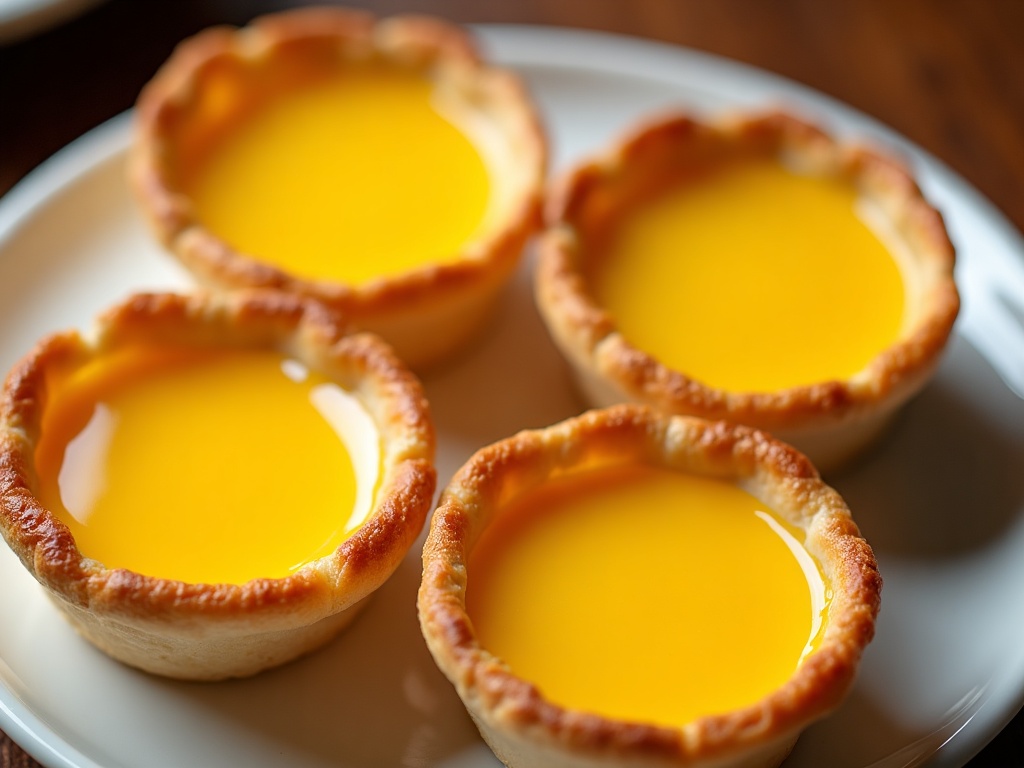
Hong Kong egg tarts (蛋撻, dàn tāat) are the beloved Cantonese bakery and dim sum dessert: a small, buttery shortcrust shell filled with a smooth, glossy, lightly sweet baked egg custard. They come in two crust styles — the cookie-like shortcrust common in Chinese bakeries, and a flaky puff-pastry version closer to Portuguese tarts — but the silky, wobbly custard is the heart of both. The custard is a simple mix of eggs, sugar dissolved in hot water, and a little evaporated milk, strained for a flawless surface and baked until just set with no browning on top. The keys are dissolving the sugar fully and straining the custard so it's glassy-smooth, baking at the right temperature so the custard sets gently without bubbling or cracking, and not overbaking — the center should still jiggle slightly when you pull them out. Serve them warm, when the contrast of crisp shell and molten-soft custard is at its best.
 Save to Pinterest
Why you'll love this hong kong egg tarts
- The classic Cantonese bakery treat — crisp buttery shell, silky molten custard.
- A glossy, wobbly custard that beats any store-bought tart, made from pantry staples.
- Far easier than it looks: a simple press-in crust and a strained custard.
- Best served warm, when the custard is soft and the shell is crisp.
Ingredients
Shortcrust shells
Egg custard
Missing an ingredient?
AITell us what you have and what you're making — get the best US-grocery swap, with ratios.
Equipment
- 12-cup tart or muffin tin — Standard tart molds give the classic shape.(shop →)
- Fine strainer — For a flawless, glassy custard surface.(shop →)
Instructions
Make the shortcrust
Make the dough: beat the softened butter with the powdered sugar until creamy, mix in half the beaten egg and the vanilla, then fold in the flour just until a soft dough forms. Don't overwork it. Wrap and chill 20 minutes.
💡 Mix just until the flour disappears — overworking the dough makes the shells tough instead of crumbly-crisp.
Press into the molds
Divide the dough into 12. Press each piece evenly into a tart mold, up the sides to the rim, keeping the bottom thin. Chill the shells while you make the custard.
Make & strain the custard
Make the custard: stir the sugar into the hot water until fully dissolved, then let it cool to warm. Whisk in the eggs, evaporated milk, and vanilla gently — try not to create foam. Strain the mixture twice through a fine sieve for a glassy custard.
💡 Dissolving the sugar in hot water (not in the eggs) and straining out any foam are the tricks to a smooth, bubble-free surface.
Fill the shells
Heat the oven to 375°F (190°C). Pour the strained custard into the chilled shells until about 80% full. Pop any surface bubbles with a toothpick.
Bake & serve
Bake 20–25 minutes, until the crust is golden and the custard is just set but still jiggles slightly in the center. If the tops start to brown or puff, crack the oven door — the custard should stay smooth and pale yellow. Cool a few minutes and serve warm.
💡 Pull them while the center still wobbles — carryover heat finishes the set. Overbaking makes the custard puff, crack, and turn rubbery.
Tips & notes
- Dissolve the sugar in hot water and strain the custard twice — these two steps are what give the glassy, professional-looking surface.
- Don't overfill the shells (about 80%); the custard rises slightly as it bakes and can overflow.
- Bake until the center still jiggles — it sets as it cools. A puffed, cracked custard means it baked too hot or too long.
- For a flakier, Portuguese-style tart, use store-bought puff pastry instead of the shortcrust and bake a little hotter.
- Egg tarts are best warm and fresh; reheat leftovers briefly in a low oven to re-crisp the shell.
Recipe wording too vague?
AIPaste any fuzzy step (少许, 火候正好, 焯水) and get exact amounts, temps and times.
Hong Kong Egg Tarts
- Prep
- 30 min
- Cook
- 25 min
- Total
- 55 min
- Serves
- 6
- Level
- Intermediate
Ingredients
- 1¾ cups all-purpose flour
- ½ cup unsalted butter, softened
- ¼ cup powdered sugar
- 1 egg, beaten (use half in the dough)
- ¼ tsp vanilla extract
- 3 eggs, room temperature
- ½ cup hot water
- ⅓ cup sugar
- 3 tbsp evaporated milk, or whole milk
- ½ tsp vanilla extract
Instructions
- Make the dough: beat the softened butter with the powdered sugar until creamy, mix in half the beaten egg and the vanilla, then fold in the flour just until a soft dough forms. Don't overwork it. Wrap and chill 20 minutes.
- Divide the dough into 12. Press each piece evenly into a tart mold, up the sides to the rim, keeping the bottom thin. Chill the shells while you make the custard.
- Make the custard: stir the sugar into the hot water until fully dissolved, then let it cool to warm. Whisk in the eggs, evaporated milk, and vanilla gently — try not to create foam. Strain the mixture twice through a fine sieve for a glassy custard.
- Heat the oven to 375°F (190°C). Pour the strained custard into the chilled shells until about 80% full. Pop any surface bubbles with a toothpick.
- Bake 20–25 minutes, until the crust is golden and the custard is just set but still jiggles slightly in the center. If the tops start to brown or puff, crack the oven door — the custard should stay smooth and pale yellow. Cool a few minutes and serve warm.
Nutrition (est., per serving): 320 cal · 7 g protein · 38 g carbs · 16 g fat
Hong Kong Egg Tarts FAQ
What is a Hong Kong egg tart?
A Hong Kong egg tart (蛋撻, dan tat) is a small Cantonese dessert with a buttery shortcrust (or flaky puff-pastry) shell filled with a silky, lightly sweet baked egg custard. It's a staple of Chinese bakeries and dim sum, served warm so the shell is crisp and the custard soft. It descends from the British custard tart, adapted in Hong Kong's cha chaan teng cafés.
What's the difference between Hong Kong and Portuguese egg tarts?
Hong Kong egg tarts have a smooth, pale-yellow, glossy custard in a cookie-like shortcrust (or sometimes puff pastry), baked without browning the top. Portuguese egg tarts (pastéis de nata) have a flaky puff-pastry shell and a caramelized, blistered, browned custard top, baked at a very high temperature. Both are delicious but the custard finish and crust are different.
Why did my egg tart custard crack or puff up?
It baked too hot or too long. The custard should set gently — if the oven is too hot it boils, puffs, and cracks, turning rubbery. Bake at a moderate temperature, pull the tarts while the center still jiggles slightly, and crack the oven door if the tops start to brown or rise. Straining the custard also helps it set evenly.
How do you get a smooth, glossy egg tart custard?
Dissolve the sugar fully in hot water rather than beating it into the eggs, whisk the custard gently to avoid foam, and strain it twice through a fine sieve before filling the shells. Pop any surface bubbles with a toothpick before baking. These steps remove air and lumps, giving the flawless, glassy surface you see in bakeries.
Can I make egg tarts ahead?
The components keep well: you can press the shells and refrigerate them, and mix the custard a few hours ahead (strain again before using). Baked tarts are best the day they're made and served warm, but they keep a couple of days refrigerated — reheat briefly in a low oven to re-crisp the shell and take the chill off the custard.
You might also like
Get our free Chinese Kitchen Starter Guide
The 12 pantry staples, the 5 techniques, and a week of beginner-friendly dinners — plus a new decoded recipe each week.
Comments
Made this? Have a question or a tweak? Share it below.
No comments yet — be the first!