Chinese Broccoli Substitutes
芥兰 · gai lan · kai-lan · Chinese kale
By The Chowmi Test Kitchen · Updated September 8, 2026
This post may contain affiliate links. Read our affiliate disclosure.
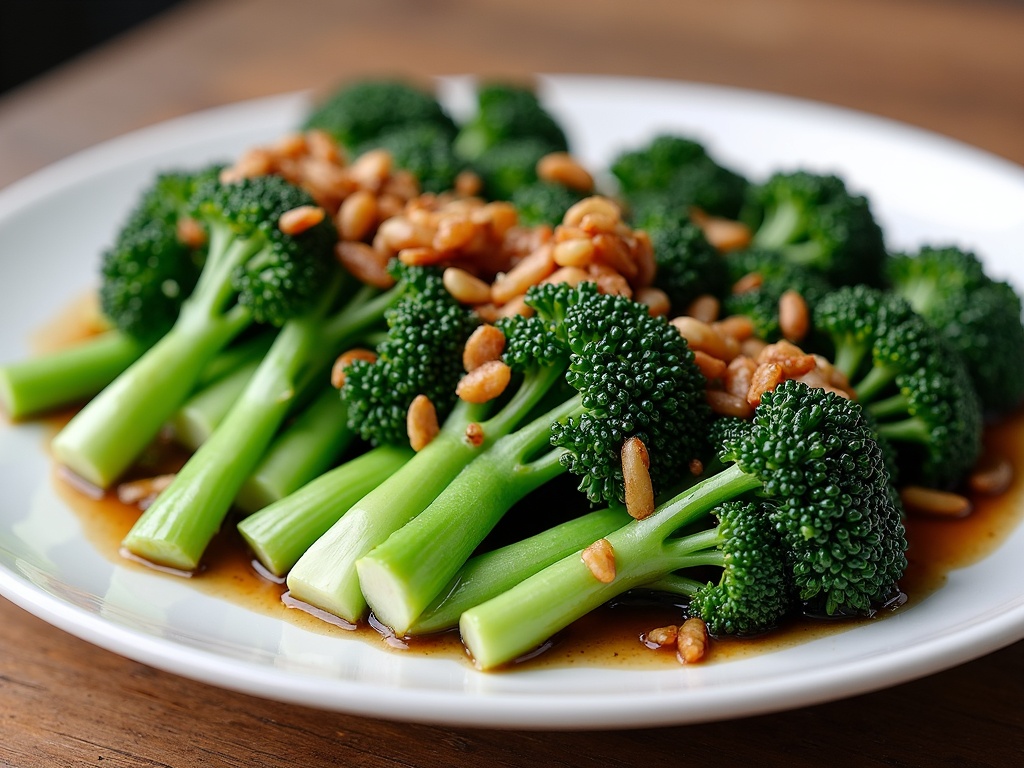
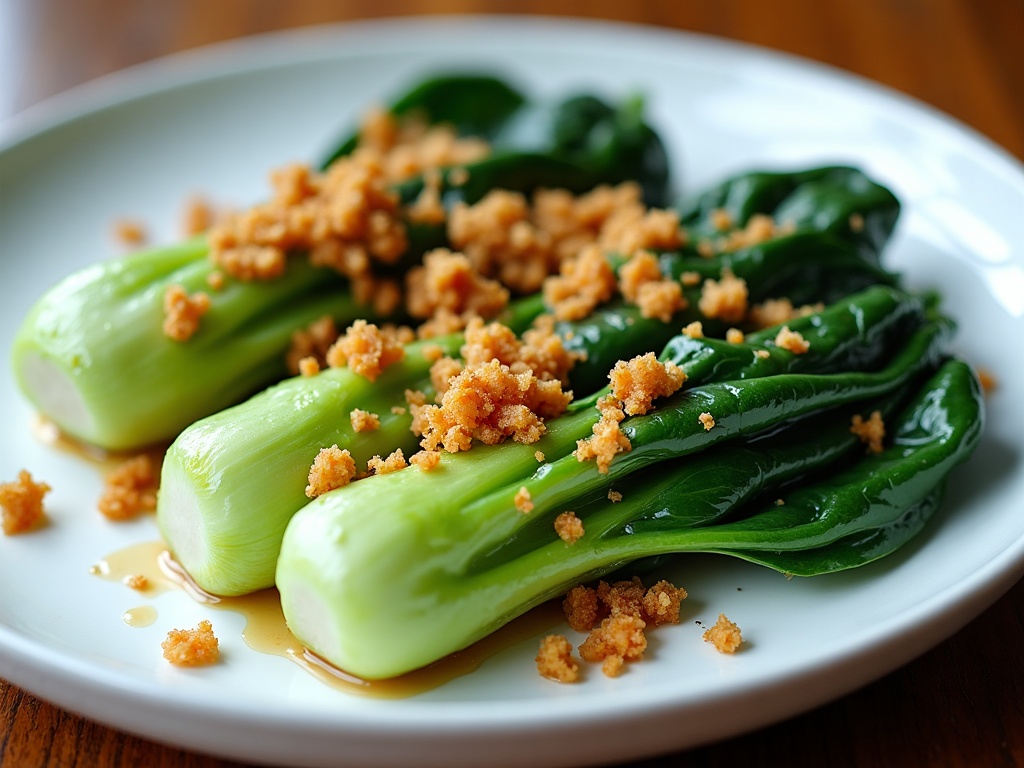
Chinese broccoli (芥兰, gai lan) is a leafy green with thick, crunchy stems, broad blue-green leaves, and small flower buds, with a pleasant mild bitterness — it's the green most often served steamed or blanched with oyster sauce, or stir-fried with garlic. The best substitute is broccolini (also called baby broccoli), which is actually a gai-lan-broccoli hybrid and behaves almost identically, used 1:1. Broccoli rabe (rapini) is another good swap if you like more bitterness, while regular broccoli works in stir-fries if you cut it into long, thin florets and stems, though it's milder and lacks the leaves. Mature kale or collard stems can stand in for the crunchy-stem element. For the classic 'gai lan with oyster sauce' side, broccolini is the closest and is widely available at regular supermarkets.
No chinese broccoli? Build the best swap
AITell us what you're making and what you have — get a tailored substitute with ratios.
Every chinese broccoli substitute, ranked
| Substitute | Ratio | Match |
|---|---|---|
| Broccolini (baby broccoli) Almost everything · vegan · gluten-free | 1:1 | 90% |
| Broccoli rabe (rapini) If you like bitterness · vegan · gluten-free | 1:1 | 78% |
| Regular broccoli (cut into long florets + stems) Stir-fries · vegan · gluten-free | 1:1 | 65% |
| Mature kale or collards (with stems) Leafy, hearty dishes · vegan · gluten-free | 1:1 | 60% |
- Broccolini (baby broccoli): A gai-lan × broccoli hybrid, so it's the closest match — tender stems, small florets, mild sweetness. The easiest supermarket swap.
- Broccoli rabe (rapini): Leafy with thin stems and a stronger bitter edge; very close in spirit, just more assertive. Blanch to tame the bitterness.
- Regular broccoli (cut into long florets + stems): Works for the crunch and color but is milder and lacks the leaves; peel and slice the stems so they cook like gai lan stems.
- Mature kale or collards (with stems): Captures the leafy, slightly bitter character; cook the stems a bit longer for the crunchy-stem element.
What is Chinese Broccoli?
Chinese broccoli, or gai lan, is a member of the brassica family grown for its thick, juicy stems and large flat leaves rather than big florets. It has a slightly bitter, earthy, distinctly 'green' flavor and a satisfying crunch. It's a Cantonese staple, most iconically blanched or steamed and dressed simply with oyster sauce and hot oil, or stir-fried hard and fast with garlic and a little Shaoxing wine. The name you see depends on which dialect the menu or market is using: written 芥兰 (also 芥蘭), it's gai lan in Cantonese, jiè lán in Mandarin, and kai-lan in Malaysia and Singapore — all the same vegetable. You'll also see it sold as 'Chinese kale,' which is closer to the truth botanically than 'broccoli' is.
Flavor: Earthy, leafy and pleasantly bitter, with sweet, crunchy stems.
Chinese broccoli vs broccolini
Broccolini was literally bred from Chinese broccoli (gai lan) and regular broccoli, which is why it's such a good stand-in. Both have long, tender, crunchy stems and small florets. Gai lan has broader leaves and a more pronounced earthy bitterness; broccolini is a touch sweeter and milder with smaller leaves. For any gai lan recipe — stir-fried with garlic or blanched with oyster sauce — broccolini substitutes 1:1 and is far easier to find.
Chinese broccoli vs regular broccoli
They're related but eat differently. Regular broccoli is grown for its large florets and has thicker, milder stems; Chinese broccoli is grown for its leaves and slender, juicy, slightly bitter stems, with only tiny buds. Regular broccoli can substitute in stir-fries if you slice it into long, thin pieces, but it won't give the leafy texture or the gentle bitterness that defines a gai lan dish.
Where to buy chinese broccoli
Stock real chinese broccoli
Chinese broccoli (gai lan / 芥兰) is sold fresh at Asian markets and many well-stocked grocers, and via Weee! or Yamibuy. If you can't find it, broccolini — now common at regular supermarkets like Trader Joe's, Whole Foods and most chains — is the closest substitute and needs no special trip.
Chinese Broccoli FAQ
What is the best substitute for Chinese broccoli?
Broccolini (baby broccoli) is the best and easiest — it was bred from gai lan and broccoli, so it has the same tender, crunchy stems and small florets, and it substitutes 1:1. Broccoli rabe works if you like more bitterness, and regular broccoli cut into long, thin florets and stems works in stir-fries, though it's milder and lacks the leaves.
What does gai lan taste like?
Gai lan has an earthy, leafy, pleasantly bitter flavor — more assertive than regular broccoli — with sweet, juicy, crunchy stems. The mild bitterness is part of its appeal and pairs perfectly with the salty-savory richness of oyster sauce, which is why 'gai lan with oyster sauce' is such a classic Cantonese side.
Is Chinese broccoli the same as broccolini?
Not the same, but closely related — broccolini is a hybrid of Chinese broccoli (gai lan) and regular broccoli. That shared parentage is why broccolini is the go-to substitute: it has gai lan's long, tender stems and mild sweetness with smaller leaves. They can be used interchangeably in nearly any recipe.
How do you cook Chinese broccoli?
Two classic ways. Blanch or steam it briefly, then dress it with a little heated oyster sauce and hot oil for the iconic Cantonese side. Or stir-fry it hard and fast with garlic, a splash of Shaoxing wine, and a pinch of sugar. Slice thick stems lengthwise or give them a head start so they cook through as fast as the leaves.
Can I use regular broccoli instead of gai lan?
In stir-fries, yes — cut it into long, thin florets and peel and slice the stems so they cook like gai lan's. It'll give you crunch and color, but it's milder and lacks the leaves and the gentle bitterness. For the leafy character, broccolini or broccoli rabe is a much closer match.
How do you prepare Chinese broccoli before cooking?
Trim about an inch off the dry bottom of each stem, then deal with the thickness difference, which is the only real technique here. Stems thicker than a pencil should be split lengthwise — halved, or quartered if they're very fat — so they cook at the same rate as the leaves. Some cooks peel the toughest lower stems with a vegetable peeler, which is worth doing on older, fibrous bunches. Wash well (grit hides where the leaves meet the stems) and shake dry, because wet greens steam instead of searing. If you're stir-frying, either add the stems 30–60 seconds before the leaves, or blanch the whole thing for 60 seconds first and then stir-fry, which is what most restaurants do.
What is Chinese broccoli called in Chinese?
It's written 芥兰 in simplified characters and 芥蘭 in traditional. The pronunciation depends on the dialect: gai lan (gaai3 laan2) in Cantonese, which is the name that reached American menus because Cantonese immigrants brought the vegetable, and jiè lán in Mandarin. In Malaysia and Singapore it's usually spelled kai-lan. Markets sometimes label it 'Chinese kale,' which is botanically more accurate than 'broccoli' — it's Brassica oleracea var. alboglabra, a kale relative grown for stems and leaves rather than florets.
What's the difference between gai lan and bok choy?
They're both Cantonese staples but they behave completely differently. Gai lan has firm, crunchy stems and flat, slightly bitter leaves, and it holds its texture through hard cooking. Bok choy has crisp white or pale-green ribs and soft, mild, sweet leaves with almost no bitterness, and it collapses much faster. Use gai lan when you want a green with backbone and a bitter edge to cut through oyster sauce or rich meat; use bok choy when you want something tender and mild, or in soups and braises where gai lan would be too assertive. They're not good substitutes for each other.
Why is my Chinese broccoli tough or too bitter?
Tough usually means the stems were too thick and went in whole — split them lengthwise so heat reaches the center, and peel the fibrous outer layer on older bunches. It can also mean the bunch was simply mature; younger gai lan with thinner stems and unopened flower buds is far more tender, so pick bunches with tight buds. As for bitterness, a gentle bitter edge is the point of the vegetable, but you can soften it: blanch for 45–60 seconds in salted water with a pinch of sugar before stir-frying, and pair it with something salty-sweet like oyster sauce, which is exactly why that classic pairing exists.
Recipes that use chinese broccoli
Get our free Chinese Kitchen Starter Guide
The 12 pantry staples, the 5 techniques, and a week of beginner-friendly dinners — plus a new decoded recipe each week.